by Michael Cropper | Oct 14, 2011 | SEO |
There has been a lot of developments over the past few years with Google in the travel industry and their actions are ones I have been closely watching. With Google Hotel Finder launching earlier this year it is interesting to see how Google is changing.
When searching for hotels online there are two main categories of searches
- Destination searches such as London Hotels
- Hotel name searches such as The Lowry Hotel
So if we have a look at each of these to see how Google is handling these now we may get an idea of what lies in store in the next year or so.
Destination Searches
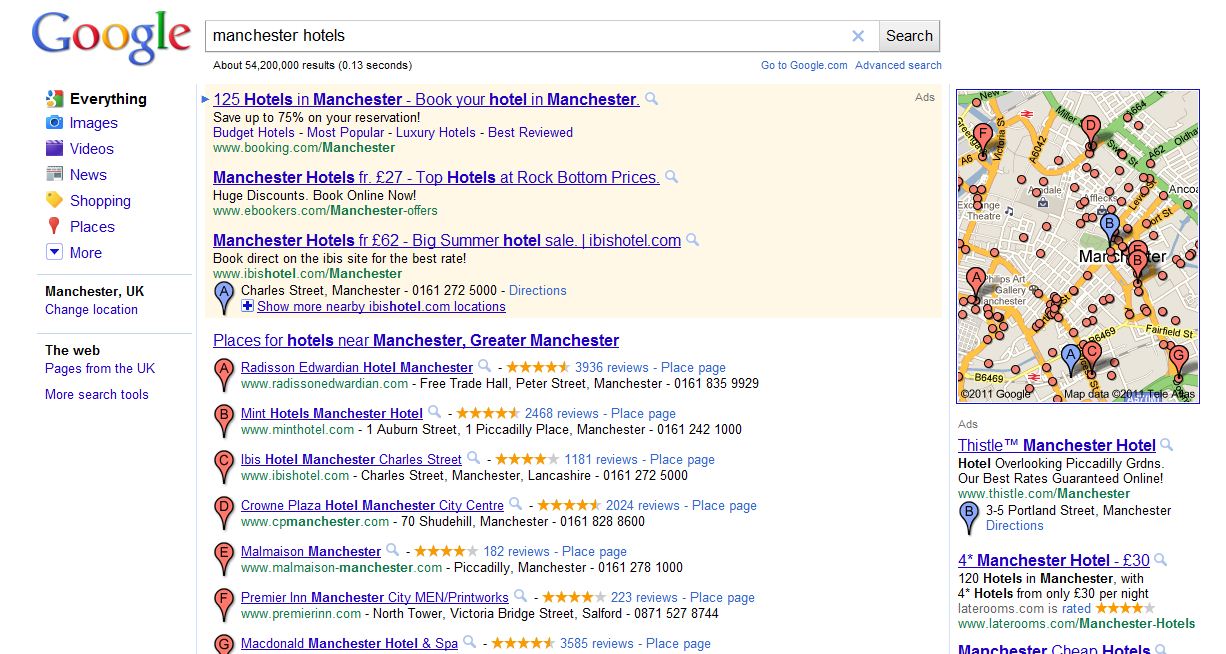
Looking at the search term Manchester Hotels we can see that there are several important parts to this.
Here we can see several parts to this section which are
- The link for “Places for hotels near Manchester” and “More results near Manchester”.
- The travel dates are listed
- A selection of individual hotel websites are listed
- Different recommended search terms related to “Manchester Hotels”
- Nearby locations
Lets take a look at each one of these and see how Google are handling this.
Places for hotels near Manchester
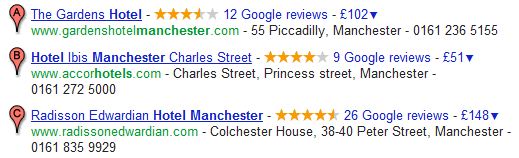
This is where the
link goes to.
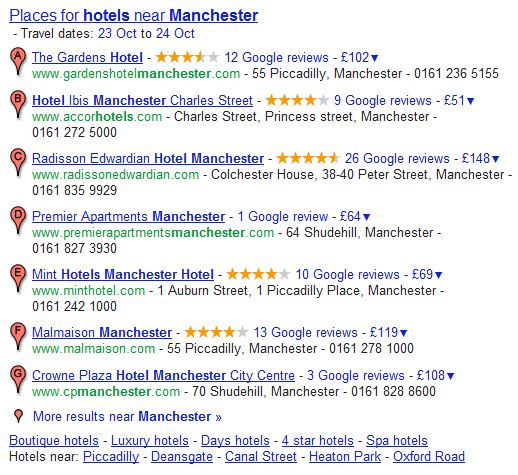
As we can see above, there are what you would expect to see on any hotel aggregator website such as
- Hotel name
- Brief snippet of information (albeit a very poor snippet)
- Link to show where the hotel is located on a map
- Average rating of the hotel
- Number of reviews of this hotel
- Price of the hotel for today
When comparing this to some of the hotel aggregators, it seems Google has got a lot of the areas covered already. Hotel aggregators really need to step up in terms of innovation to ensure they are staying ahead of Google which is going to be quite a challenge.
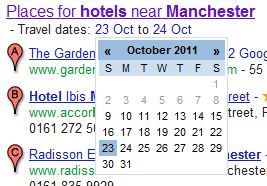
Travel Dates Listed in SERPs
This is a great option for customers since this will automatically update the prices from various different hotel aggregators when the date is chosen.
Individual Hotels Listed
Again great for the user since this allows them to go direct to the hotel who may be able to deal with their queries better.
Related Search Terms and Nearby Locations
These ultimately send the user through the same process as above but with a more refined search.
Hotel Name Searches
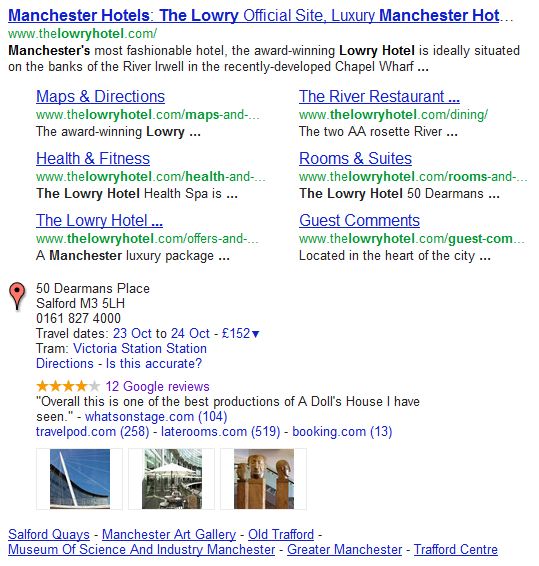
Now if we have a look through the same process for hotel name searches to see how Google is handling these.
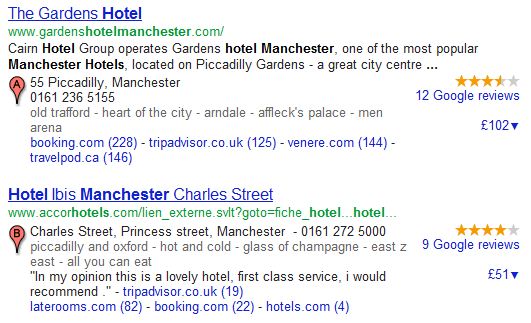
These listings within the SERPs are a first step towards integrating all of the universal search items into one nice area, which nicely takes up a large part of the results and is positioned prominently above everything else. Now for a user, this again does make sense to have the hotels listing first with other good content pulled together from various sources. My main issue with this though is that Google is notoriously bad at grouping things together like this and there is often a lot of errors with either images or reviews that are listed.
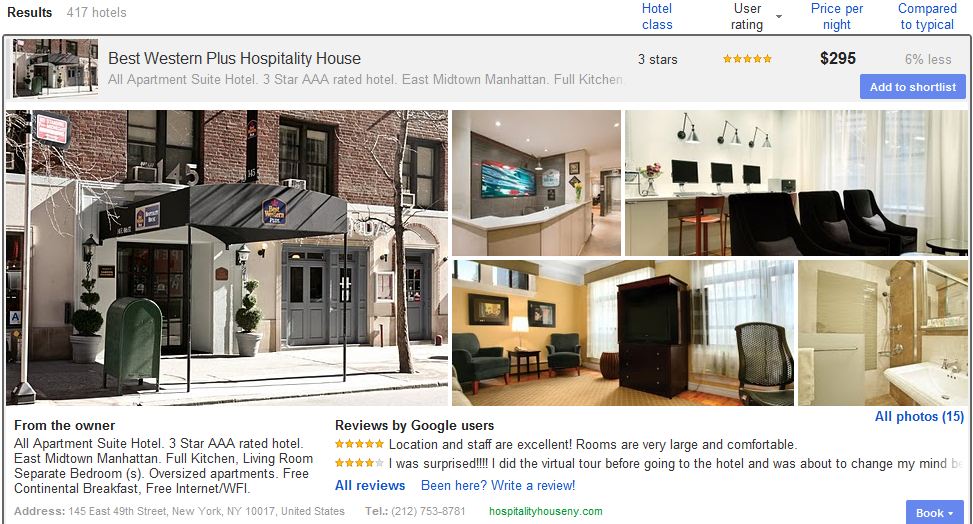
This listing has got all of the items that have been discussed but is just formatted in a nicer way. The interesting point will come when this switch is made from a listing like above to a similar listing like found on Google Hotel Finder as seen below
I have no doubt that this is on the cards for Google, it is just a matter of when they will do this or begin directing users towards their own Hotel Finder product.
How Much Can Google Reviews Be Trusted?
One item that Google has yet to work on though is the quality of the reviews left for hotels. Since there is no way of Google knowing if the person has actually stayed in the hotel and this is there hotel aggregators can stand out as they have the full booking details of the customer and know if they have stayed there. In addition hotel aggregators also have manual checking process in place to keep hotel reviews high quality.
As for how Google may overcome this issue, I am not sure yet. Although I imagine there will be some kind of information linked in with Google Plus in a very similar way of how Page Rank works. I.e. If the person leaving a review has an active Google Plus profile, lots of friends & followers and is also active on other Google products. This would be one way to class a reviewer as trustworthy or not. The same is on Twitter when it is obvious someone who has just began following you is a bot due to their statistics.
Is Google Going To Become a Competitor?
In a recent article from Marketing Week, apparently not.
“We have no intention of entering the booking space” – Google
Although I am not convinced. There are a lot of options open to Google in this industry and it is an extremely lucrative area for them, so only time will tell exactly what they will do. One thing for certain is that the travel industry needs to step up their game to compete against Google.
by Michael Cropper | Oct 14, 2011 | Social Media |
Local businesses in Manchester are taking full advantage of social media to help promote their selves and services. There can be a lot of businesses who try this and fail tragically, but for certain business this makes full sense. I always get a lot of random people following me on twitter purely to get me to follow them back, albeit mainly people promoting their SEO services / blogs etc, but more recently I have noticed a lot of bars begin to follow me on Twitter (@MickCropper).
I think this is a great idea for bars and events to follow local people on twitter, purely to promote their event since good places and events can be difficult to find when not always mingling in those circles.
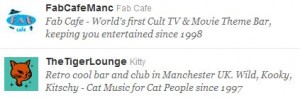
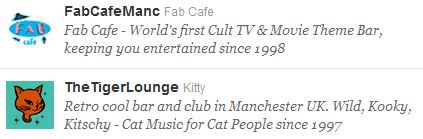
A couple of bars who have started following me are @FabCafeManc and@TheTigerLounge, both of which I haven’t been to before. They are always places on my “to drink at” list but I have just never got around to it, so I may just be going to these places a little sooner than I planned now they are back in the forefront of my mind.
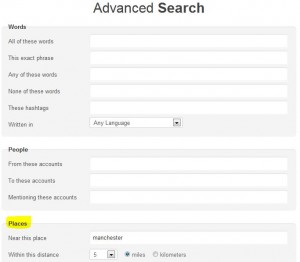
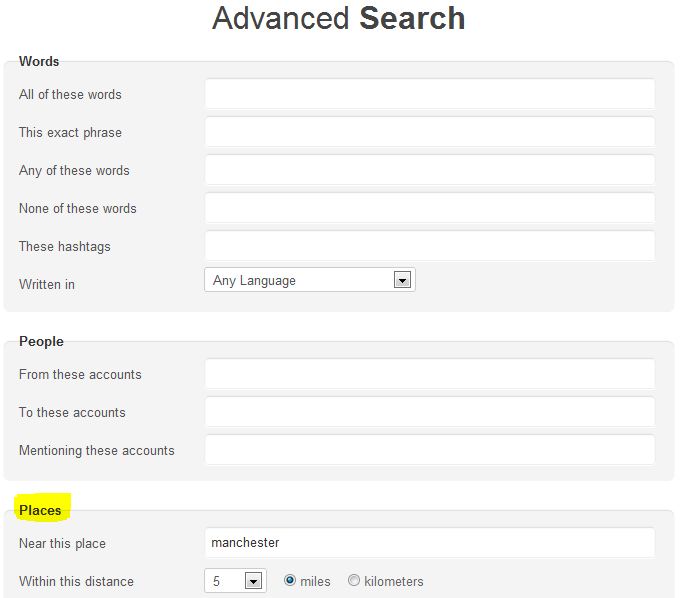
If you are looking to promote your local business via social media then Twitter can be a good place to start by using Twitter’s Advanced Searchand finding tweets for people in your local area.
In addition to this, another option for finding new customers for your local business is seeing who your competitors are following and who are following them. One thing I certainly noticed with the bars who began following me is that once one started following, others soon followed on so this is already happening. If you aren’t stalking your competitors then you are missing a trick, since they will be doing it with you.
by Michael Cropper | Sep 14, 2011 | Data and Analytics, SEO, Social Media, Technical, Tracking |

With the recent announcement from Bit.ly stating that their Pro version is now the normal version, this means that it is now possible to get your own custom short URL. But how though?
Step 1 – Register a nice short domain name
A good place to do this is 101Domain.com as you can get a nice view of all top level domains available, with the added bonus that they are very reasonably priced too. For mine I chose “mic.cx”. When looking on 101Domain.com you will notice they offer some great advice on the restrictions certain domains have, such as where the hosting or name servers have to be based so keep an eye on this when purchasing an odd top level domain.
Step 2 – Set up the DNS A record
When you log in to your registrar (the person you bought the domain from) there will be some settings somewhere that allow you to change the DNS records (not to be confused with the Name Servers). Here is an example of what this will look like
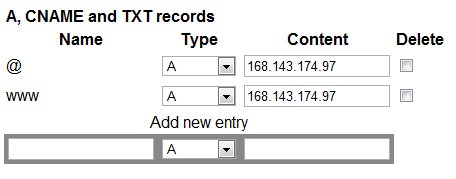
When you see this, change the IP address which is currently in there (may be worth making a note of this in case you mess up the first time like I did!) to the IP address “168.143.174.97” which is for Bit.ly. Other URL shortening services that offer this will have a different IP to enter, so check on their FAQ’s.
The “@” above, strangely, has no relation to email. It is referring to your domain in its purest form with no sub-domain. So for example that would mean mine is “http://mic.cx”
The “www” is referring to the URL “http://www.mic.cx” – but since Bit.ly doesn’t use this, then there is no real need to put this in – although I have done anyway for good luck.
Be aware that once you have updated the DNS settings this can take around 24-48 hrs to propagate the internet so be patient!
Step 3 – Add Custom Short Domain to Bit.ly
The next step is to go to Bit.ly (i’m assuming you already have an account at this point – if not sign up!) and click on the “settings” link from the drop down where your username is. Then add in your new URL into the box provided and go to the next step.
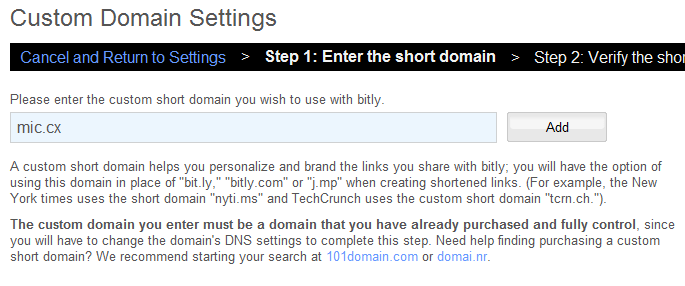
Step 4 – Verify Your New Domain
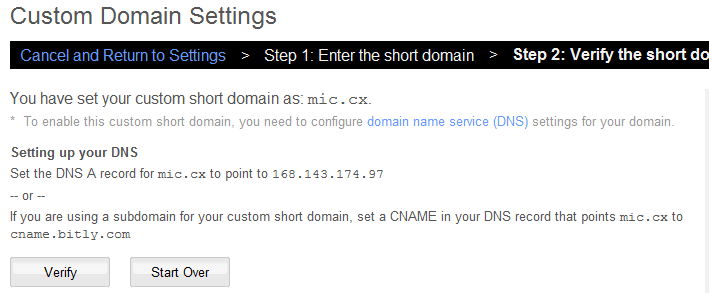
Step 5 – Success!
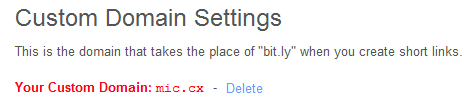
by Michael Cropper | Sep 14, 2011 | Data and Analytics, SEO, Tracking |
Different custom URL shorteners behave differently and can either help or hinder SEO so I have put this guide together for reference. I will be looking at both HootSuite and Bit.ly in this article to show how the different options behave.
HootSuite & Ow.ly
HootSuite has 4 different options when shortening URLs with their service. Each of the shorteners behave slightly differently, all have a use, but the only one that passes any SEO benefit is the one that 301 redirects the user to the page on your site.
Ow.ly
This URL shortener will automatically 301 redirect visitors to your website and passes all of the SEO benefit to your site which is what we all want.
Example: http://ow.ly/5Fjta
Owl.li
This URL shortener will 302 redirect visitors to your site although with it being a 302 redirect then there is no SEO benefit passed through this link. This may be a good option when linking out to websites other than your own if you don’t want to be seen as endorsing them in the eyes of Google.
Example: http://owl.li/5Fjwl
Hl.ly & Ht.li
Both of the URL shorteners above actually display the content of the page on your site, but on their URL which is no good for SEO. This has been implemented via an iFrame, which Google find difficult to index correctly. This page does have it’s benefits though, mainly being that these pages include lots of social sharing buttons at the top of the page. So even though the pages do not pass any direct SEO benefit, they could still be beneficial if they result in more people sharing the pages with their friends. Although personally, it is not my choice.
Example: http://ht.ly/5Fjxk and http://htl.li/5FjyV
Bit.ly
Now looking at how Bit.ly shortens URLs, they also have several options which all 301 redirect and do not have the variety that HootSuite have.
I am a little confused as to why there are 3 different URLs that all behave in the same way, maybe it is due to the limitations of custom URL shoreners – The fact that you can only have a maximum number of possible short URLs using 6 alpha-numeric characters (which is into the millions mind!).
There are also lots of other URL shortening services out there which likely behave in similar ways and offer different methods of redirection, so it is just something to be aware of when pasting these short URLs around the internet. Make sure they are passing the benefit you require.
Goo.gl
tinyurl.com
is.gd
ow.ly
bit.ly
by Michael Cropper | Sep 14, 2011 | Data and Analytics, SEO, Social Media, Tracking |
An interesting way to monitor how successful your competitors social media channels are is based on how many people are actually interacting with links and information they are sharing. This can then be compared with your own statistics to see how different your fans and followers are to that of your competitors.
It can be extremely easy to increase fans and followers on social media by linking up your current customers who are visiting your site using the various ‘follow me’ on social media buttons that are available these days. Along with running engaging competitions that will make current fans and followers entice their friends to join up.

But back to monitoring competitors click statistics.
When people are using the Bit.ly service for shortening URLs, via any of their domains or a custom URL shortener that has been set up, then you can easily see the statistics on that link simply by adding a + to the end of the URL.
For example, here is an old link that I have shared so you can see some statistics http://mic.cx/qxuDRb+
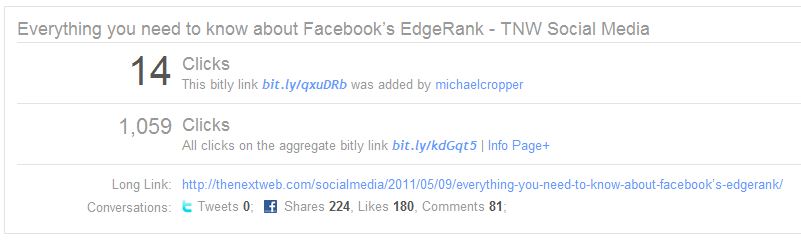
Similar statistics are also available when using Goo.gl URL shortnener, for example here is a recent URL Google shared http://goo.gl/87NmF+
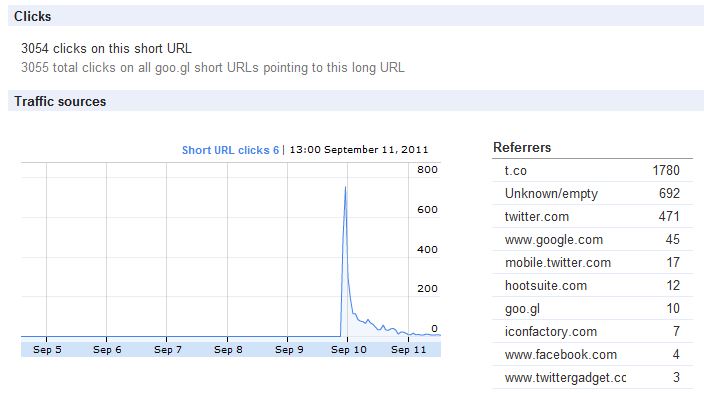
The above link shows lots of cool information which shows you how successful competitors links are and how much influence they really have from their thousands of followers.
I haven’t tried all URL shortening services to see if similar statistics are available, but since these are two of the main ones I thought I would just cover those for the time being.
There may be a way to automatically pull all of this data into a Google Doc Spreadsheet and automatically compare how followers and fans behave on the links that have been shared, although with twitter now using “t.co” for all links contained within tweets (at least via their API that is how everything comes back) then I am not sure this will be as easy to generate. Although if anyone does know of a way to do this, then please do share.
In summary, this piece of information to find out how engaged fans and followers are can be very valuable in addition to just monitoring the number of people following you on social media. This should provide some additional information into your competitors.
by Michael Cropper | Sep 14, 2011 | Digital Marketing |
Guerilla Marketing or should that be Gorilla Marketing. Take a look for yourself below, but I would have loved to be in the meeting where this was decided. “I know – why not just put a massive gorilla outside?”
This is certainly one way to get noticed. Just for a bit of background, this Skoda showroom is on a road full of other car & motorbike showrooms.

Would love to shake the hand of the person who thought this one up, pure genius. I don’t work too far off where this is, so it certainly caught my eye on a normal boring drive home!
by Michael Cropper | Jun 14, 2011 | Thoughts |
With all of the changes and announcements from Google recently it appears they are heading in a completely different direction than their core business, search. Since Google began, it has always been about providing the best results to the users via their SERPs. They tried to give the user the choice of 10 organic (give or take) results based on a complex algorithm of hundreds of signals. They even wanted webmasters to get involved by making content more ‘readable’ to Google, which I guess is why the SEO industry was born.

Recently though Google seem to be steering away from this and thinking ‘Google knows best’. They now seem to be heading towards providing users choices based not on their normal SERPs, but choices via their own Google products. This is a very worrying direction since once they create a product and effectively force users to use this by prominently positioning it in the SERPs then this flushes all competition down the drain.
Lets take a look at a few of the recent developments from Google.
Google Advisor
Google Advisor which is a financial comparison tool comparing mortgages, credit cards and savings accounts.
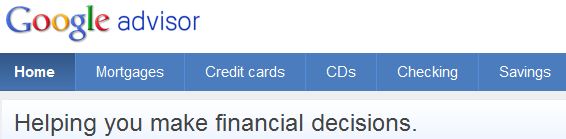
This seems like a direct attack on the financial services industry and more importantly the rise of the recent price comparison monster websites. Should Google really be providing the same service as price comparison websites here? I don’t believe so as this is no longer about providing the ‘right’ results to the user, it is about pricing the competitors out of the market. Since Google doesn’t (at the moment) take any commissions on these products being offered, this could push out the price comparison websites who do take a commission – especially if Google begin to prioritise their own products in the SERPs.
Google Flight Comparison
Google Flight Comparison in the SERPs is Google’s latest brainwave which shows flight comparison information to ‘make it easier for users to understand’.
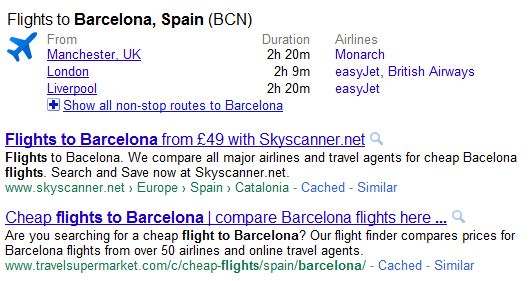
Seems like a good idea at first, and I know first hand that flight websites are some of the most confusing when coming to make a purchase. But looking at this closer, you can see that all of the comparison websites are now further down the listings in favour of Google’s own products! When did it become Google’s job to make things like this easier? Surely this is the job of the actual flight comparison websites and the flight companies their self, since they do have enough incentive to do this….better usability equals more sales.
Google Local
Now we get on to Google Local which includes the 7-pak results and the local listings mingled in within the SERPs. If we take a look at the listings shown for the search term “Manchester Hotels” then we can see thateverything above the fold is either sponsored listings or Google’s own products.
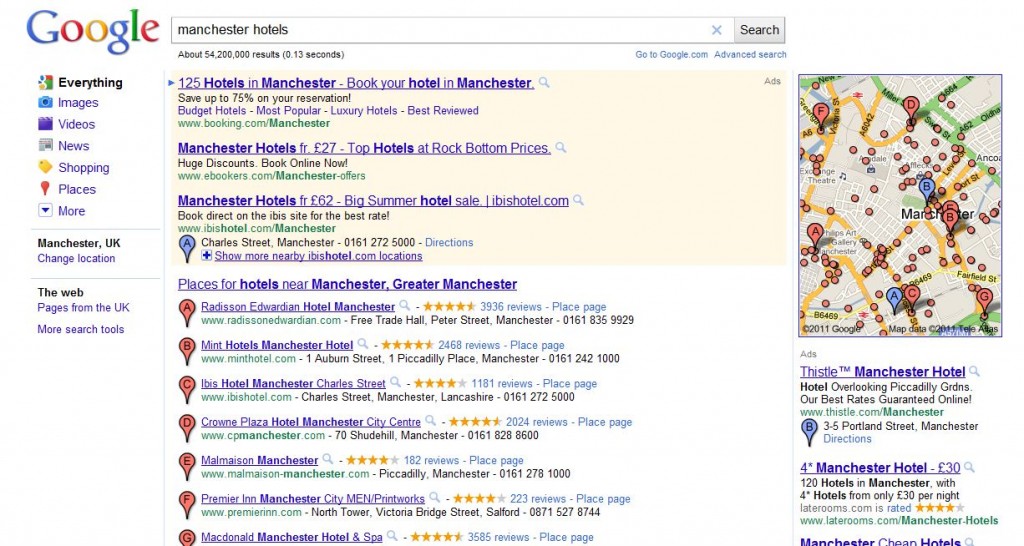
But wait, Google recently said that we should be focusing on quality content, making our websites the top source of information within the industry. And quoting the guidelines from Google directly
“Does this article have an excessive amount of ads that distract from or interfere with the main content?”
Is Google ignoring its own guidelines again…..? This whole scenario is causing lost business for the smaller companies who cannot afford the sponsored listings and lets be fair, the Google Places listings are more of a bonus than a real listing.
Google Mobile Wallet
Next we are looking at the latest Google Mobile Wallet which is offering a Paypal style payment system which is via your mobile phone, the only difference being is that Google Mobile Wallet is free! Does this mean that people will slowly move away from Paypal or maybe even moving further away from traditional credit cards?

This would no doubt all link in nicely with the Google Advisor tool mentioned above within the next few years.
Google Offers
Google’s latest product is Google Offers which seems to be attacking Groupon and other offer websites. Quite fitting really since in the latest algorithm update by Google, Panda, was actually attacking websites like this!
 This seems like the good old business plan behind Tesco in the UK. Build lots of large retail outlets and offer cut price goods which forces all of the smaller retailers out of business. Then once all of the smaller retailers are forced out of business because they cannot compete in the market, Tesco opens up some Tesco Express stores to fill the new gap in the market and totally dominating the market place.
Conclusion
It is certainly interesting looking at all of these new developments from Google and how they may all link together. Google already dominate a massive market and it seems they are going after everyone else now too….
Watch this space…
by Michael Cropper | Jun 14, 2011 | SEO, Social Media |
Twitter announces the new follow button, Google announces the launch of their +1 button, we already have the ability for a Facebook Like button and we have the fantastic AddThis too.
This seems like an awful lot of buttons to me – but I do believe there is a benefit to each of them (well most) if used correctly.
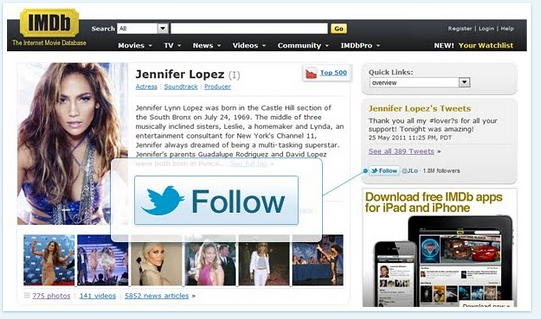
The new Twitter one-click-to-follow button is a great opportunity to get more people following you on twitter as it cuts out one of the steps required to follow. Previously people had to click from your site though to your twitter page, they then had to click to follow you. This seems like a small difference but I believe it is an important one, the easier you make it for people to do something then the more likely it is that they will do it.
The Facebook Like button has been around for a while and the benefits are phenomenal when incorporating this. The summary of the Like Button means that all of your website is now part of Facebook’s social graph, meaning that your pages can be found if people search for certain things via the Facebook search box (as long as the page has been shared at least once). You then get access to lots of cool information about this user which can be used to personalise pages and show which of their friends also like this page/item/category etc.

The AddThis plugin in my opinion is the best thing since sliced bread. It incorporates all of the main social media websites, it automatically orders the list of sharing buttons based on the individual users preferences if they have use it before (or ordered by global popularity if user has never used AddThis). What a great tool and we all know as SEOs that the more shares/tweets/links generated then the better your site will rank in the SERPs.

Regardless of any SEO benefit here though, it is still the right thing to do when encouraging more people to share your content as this is the modern day word-of-mouth. This is real people sharing this content/product with their real friends and associates.
Now the only odd one in the list above is the new Google +1 button. When did Google decide this was a good idea? Why did Google decide this was a good idea? I can totally understand this from a data collection point as this data can be used to personalise a users search results based on the websites they like (which IMO isn’t likely to work as well as Google would like). The data can also be used as great information to personalise the sponsored adverts too. But I am yet to be convinced of the true value for the user behind this – only time will tell I guess.
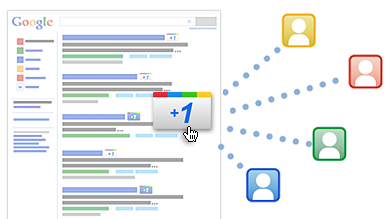
Currently the plus 1 button requires a separate install as it is not yet bundled within the main AddThis button. When I asked AddThis when this would be available, they were unsure of a timescale for this.
In the mean time though whilst I wait for some more information about this button and how successful / unsuccessful it turns out to be, I may install it and give it a go!
by Michael Cropper | May 14, 2011 | Thoughts |
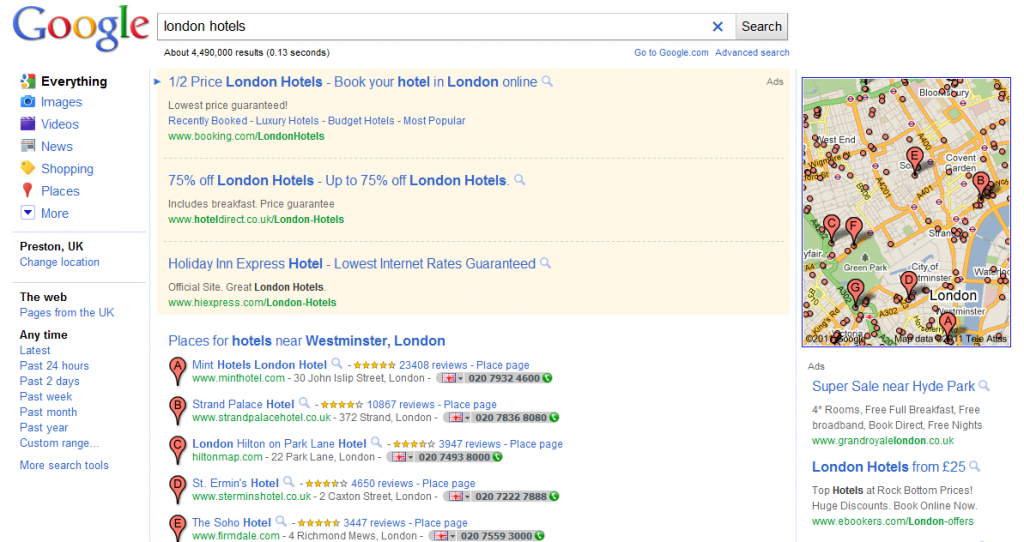
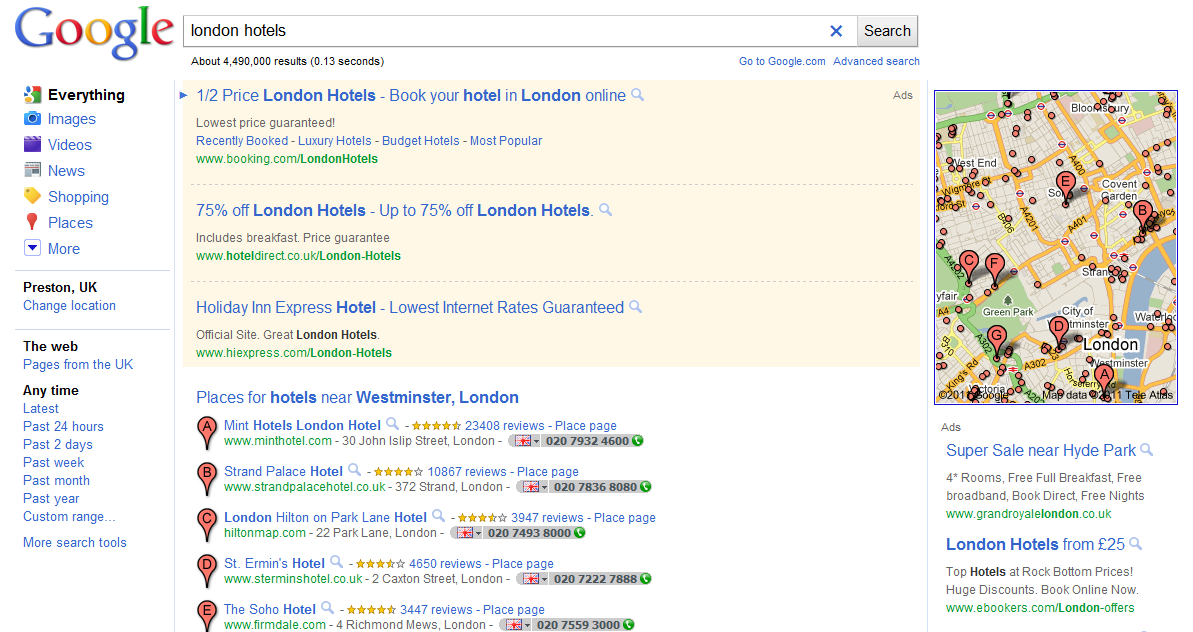
As some of you may have noticed the new search results Google is testing today. Whether you love or hate them, doesn’t really matter – Google is doing it and we have to adapt if they do roll this out for everyone at a later date. Below is a search for the phrase London Hotelson Google.co.uk which shows the new layout.
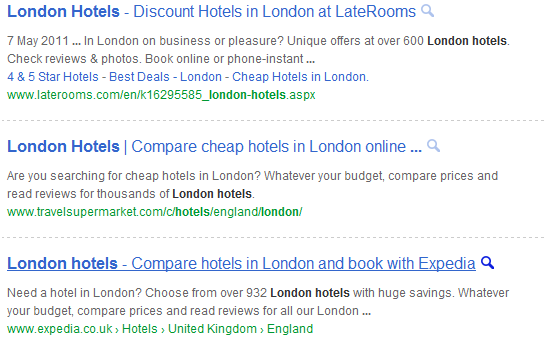
Now these results alone are not the main issue for me, it is how they have also expanded the width of their sponsored results too. Which means that there are now no organic results at all above the fold of the page with my screen resolution set as 1366 x 768.
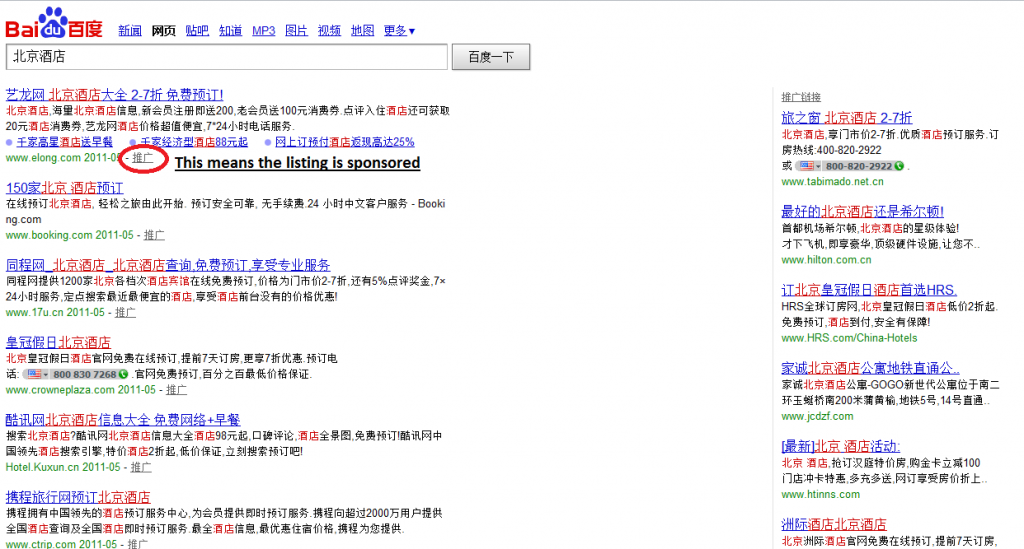
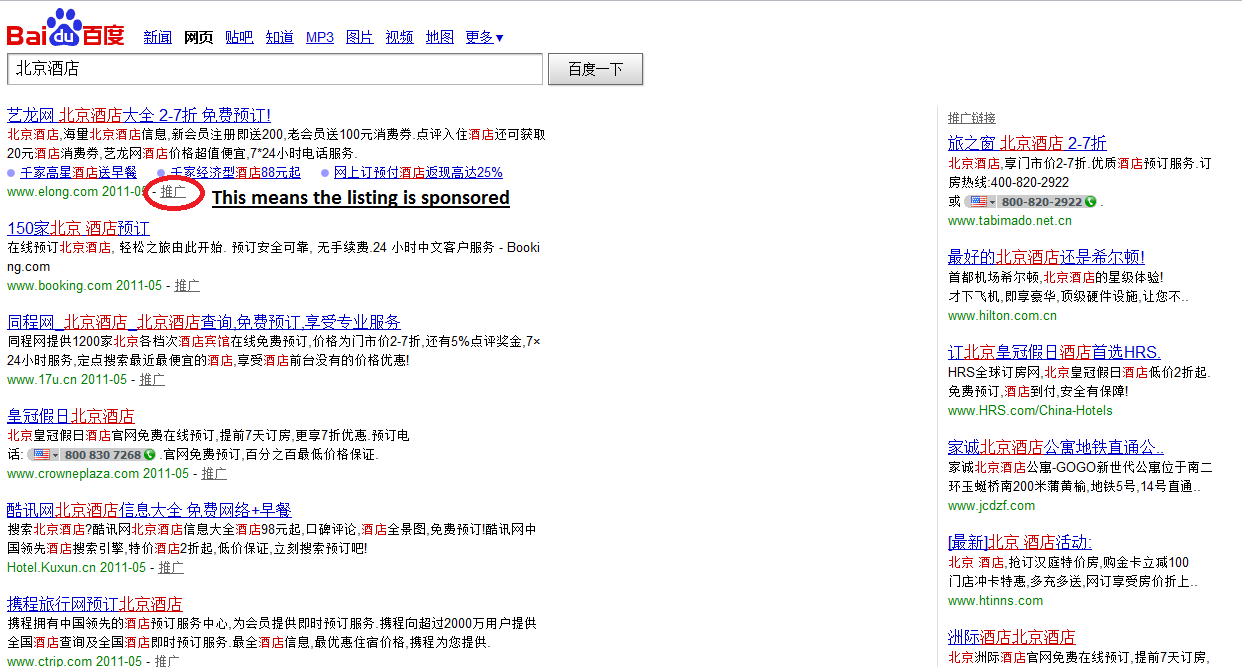
Baidu is China’s main search engine with around a 67% market share (Google has around 16% in China). Baidu has no shame in admitting they are wanting as much money as possible from adverts which is why up to 80% of Baidu’s SERPs can be either paid/sponsored listings or Baidu’s own services (such as its own versions of Wiki, Yahoo Q&A, Forums etc)
When you look at the Baidu search results for the phrase “Beijing Hotels” in Simplified Chinese, you will also notice that there are absolutely no organic listings above the fold too.
Is Google putting more weight towards the financial gains within markets where they totally dominate? It would certainly make sense, since there is a finite amount of searches that happen daily and if they dominate the search engine market within a certain country then they may as well get more money from these queries.
Although, what happened to all that “its all about the user”? I am not convinced seeing less results above the fold is better for the user. I like choice, I want to see a selection of results which I can choose based on what I am really looking for, not what Google thinks I am looking for.
by Michael Cropper | May 14, 2011 | News, PPC, SEO |
As I am sure anyone in the SEO game is familiar with the Google AdWords Keywords Tool that shows the popularity of various search terms. What you may not be aware of is the cheeky actions Google is doing for people arriving at the keyword tool from Bing.
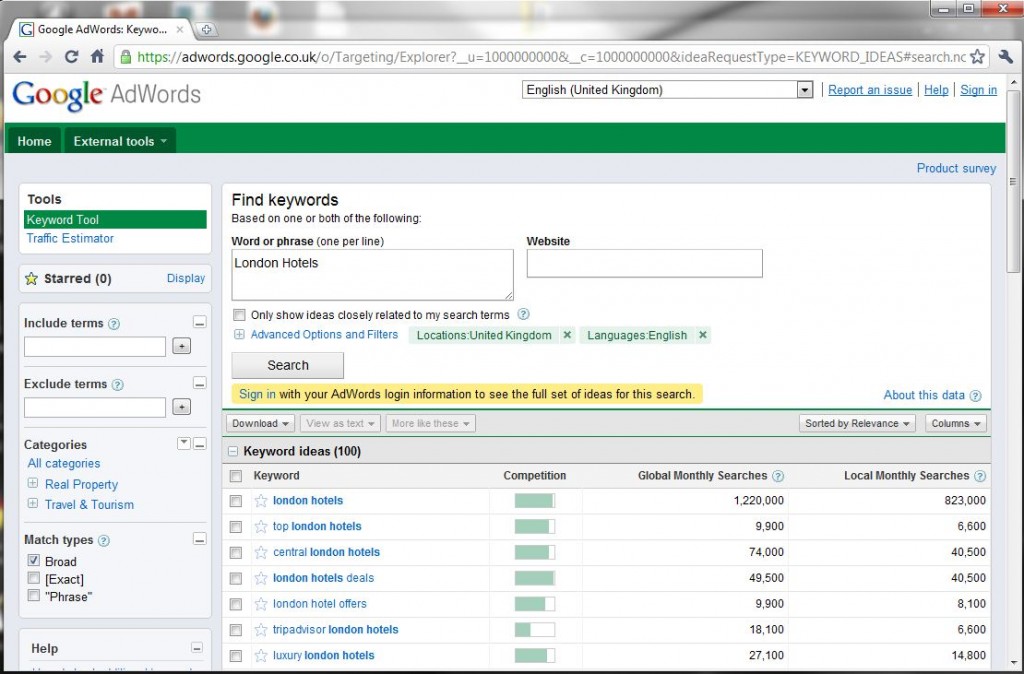
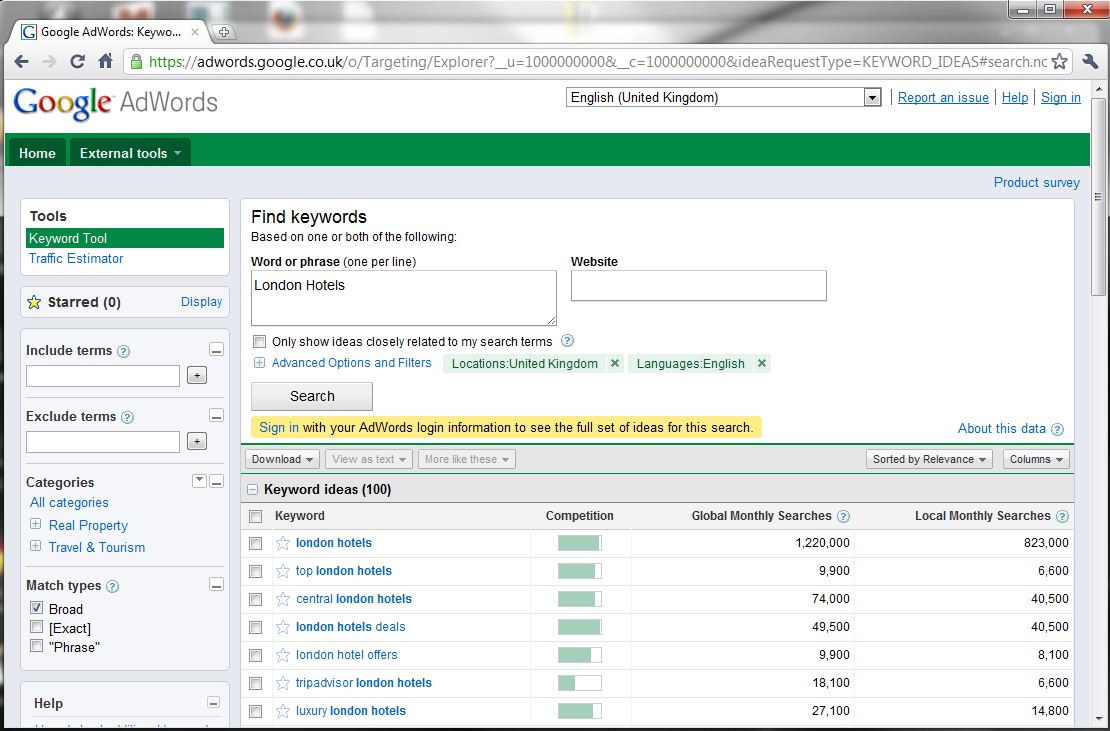
So here is the normal actions for when you arrive at the Keyword Tool from the Google SERPS and search for “Broad Match” information
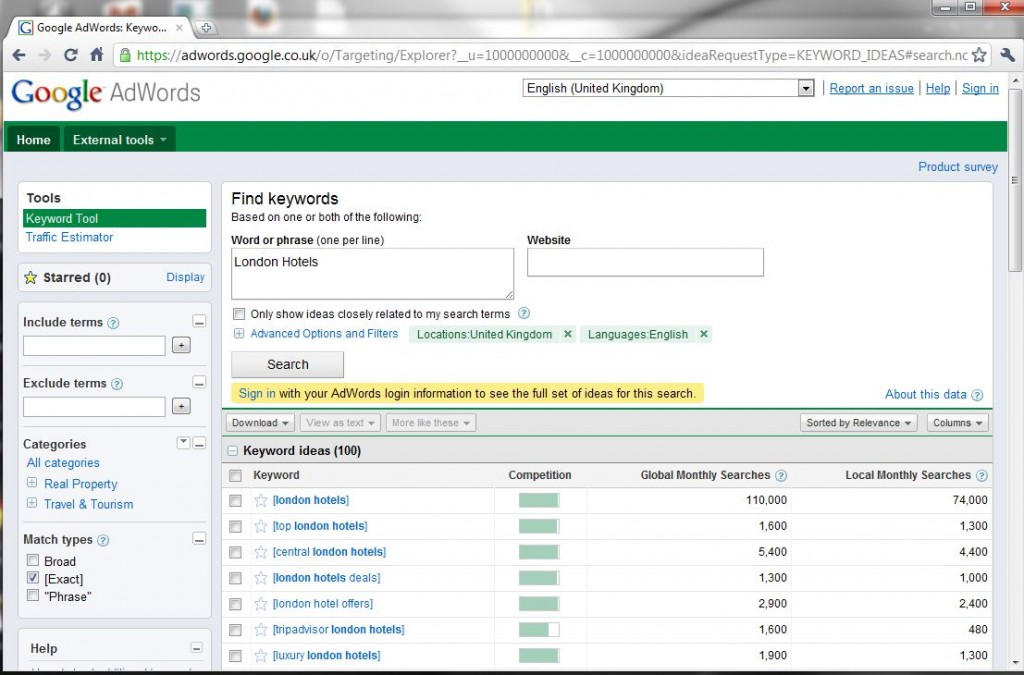
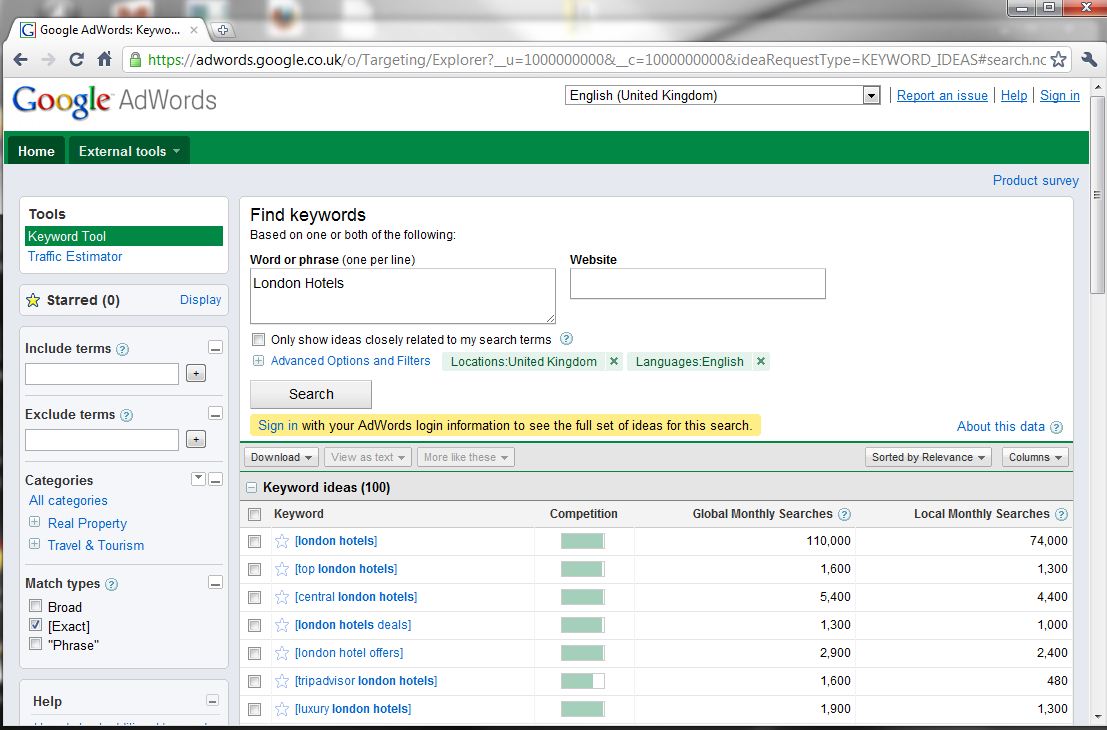
Then when you select the “Exact Match” (aka, useful information) you get to see the data that can be acted upon
Now when you try and repeat the above process when entering the keyword tool from Bing’s SERPs you get an all together different result.
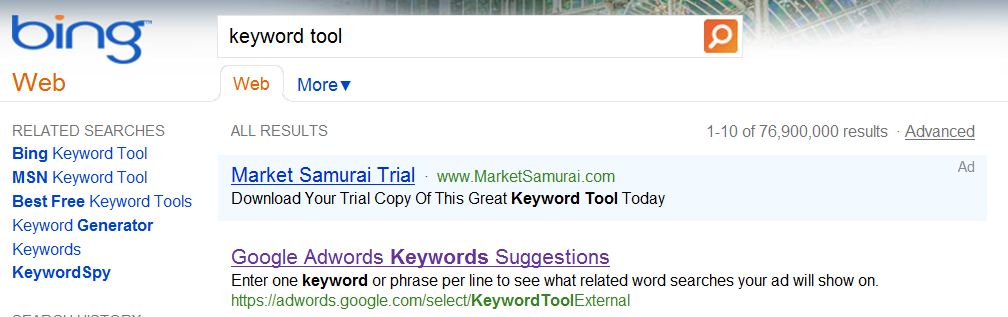
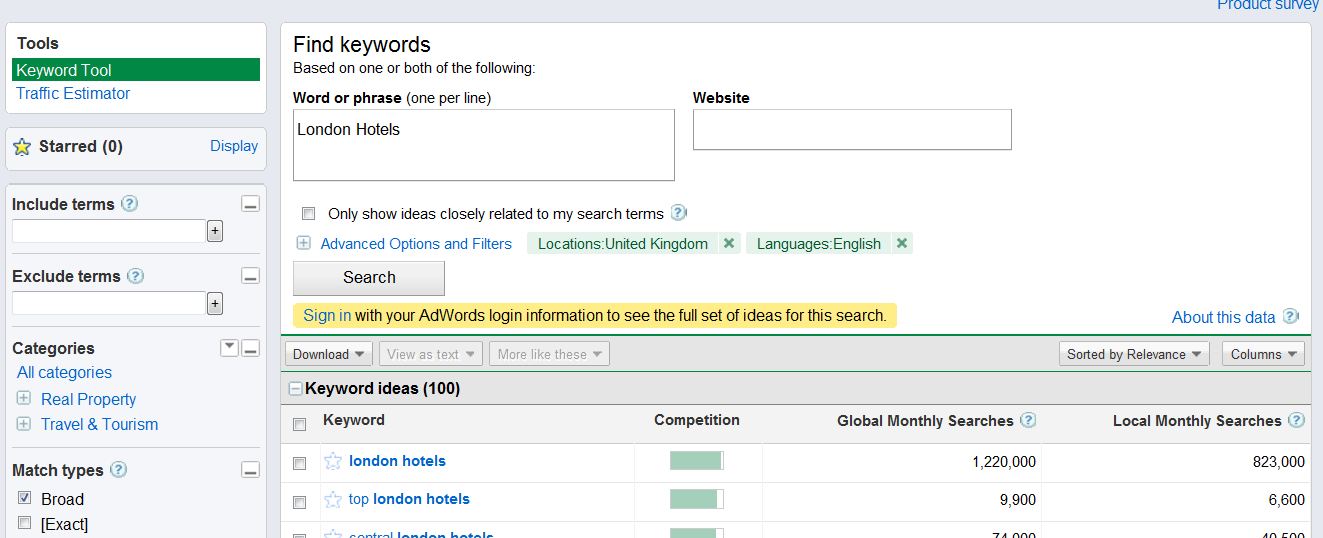
Then when arriving at the tool, everything seems normal to begin with when the default match type is set to “Broad” (aka, worthless data).
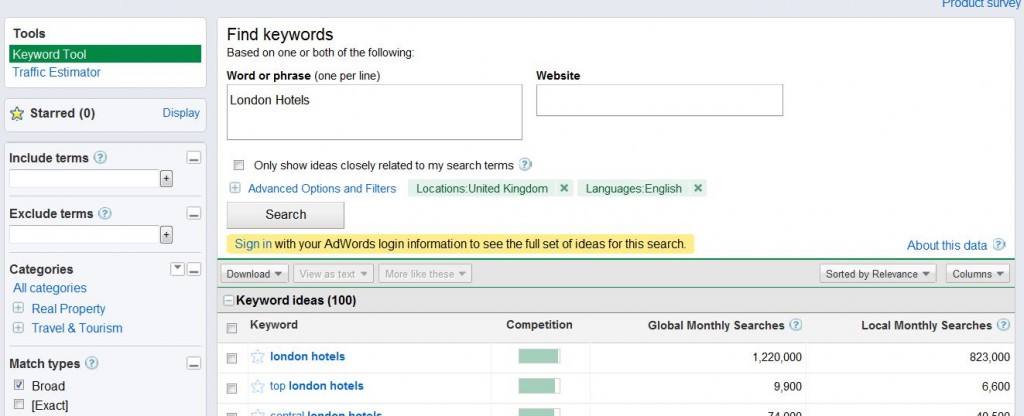
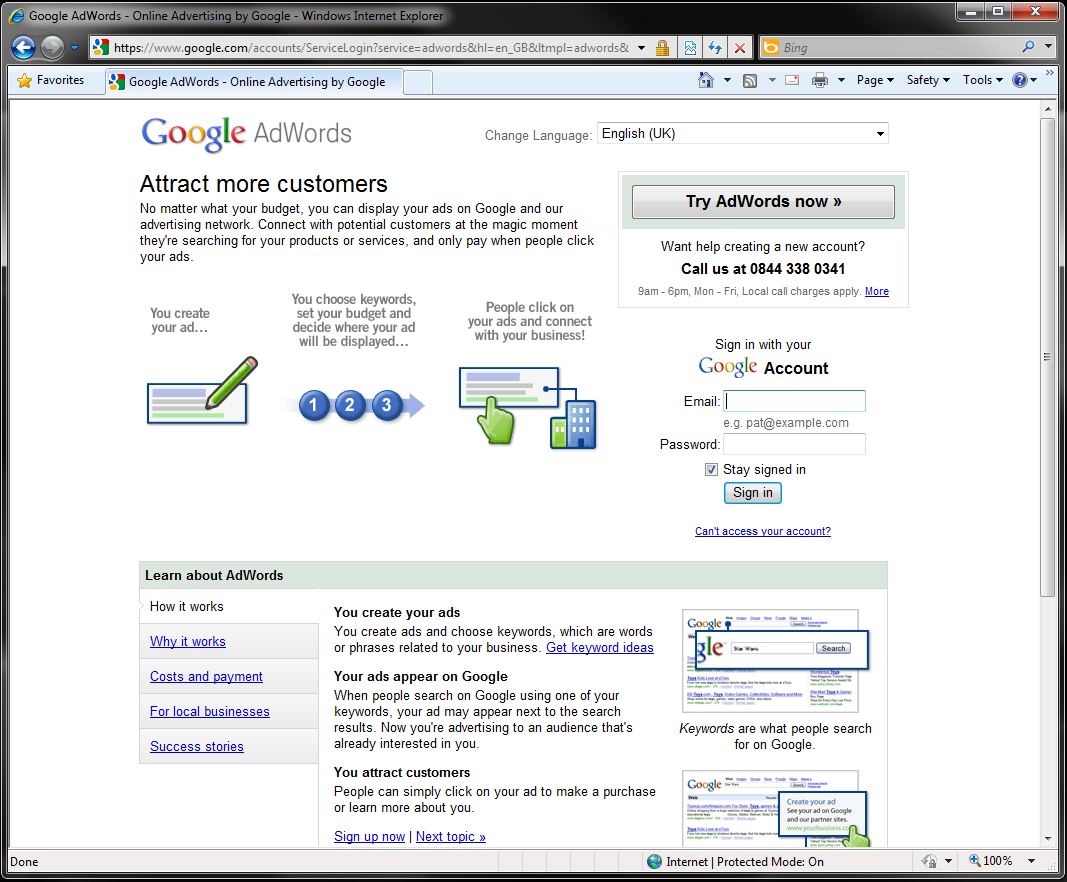
Now the interesting part comes when selecting to view all of the information on the “Exact Match” type
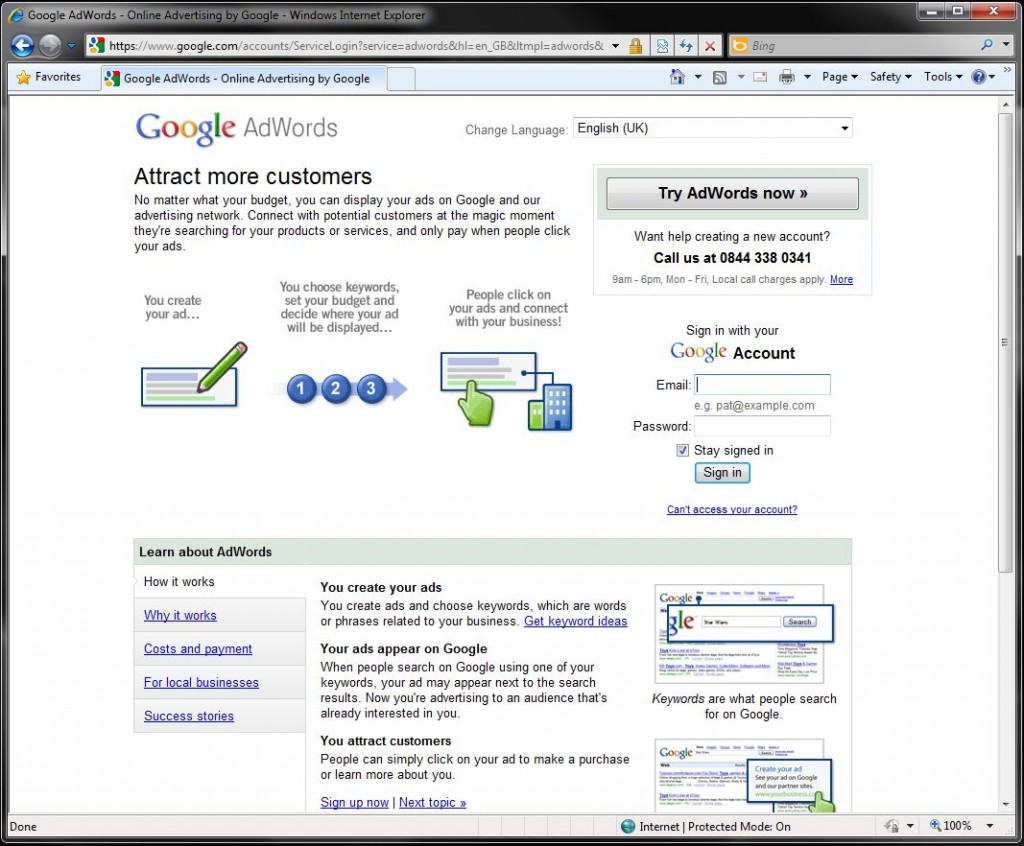
Yes that’s right, Google is doing a cheeky redirect to users who are arriving at the keyword tool form Bing. Google is forcing Bing users to sign up with Google AdWords to view the same information that is publicly available when arriving at the tool from the Google SERPs.
Is this right for Google to be doing this? Who knows. But they are and I am sure they will have some metrics which show how effective this has been. Maybe Bing should remove this URL from their SERPs in response to this? Seems crazy how Bing would be showing results for their competitors advertising platform, when instead they could promote their own better.


Google needs to be broken up. They have too much power. I intend to request any and all U S government documents involving Google under the Freedom of Information Act and see what I can find. I think Google may be guilty of fraud in their use of Moffett Field to house their fleet of private jets. I have won about 30 Freedom of Information Act cases against the federal government. They may owe hundreds of millions if not billions in damages.
Sounds exciting Lloyd, do keep me posted