by Michael Cropper | Jul 1, 2015 | SEO |
Why is it that so many businesses still see a website as a cost rather than an investment to generate a return? We live in a digital world so why isn’t your online presence at the forefront of your business strategy to increase revenue? Well, after speaking with thousands of businesses ranging from startups all the way up to companies with offices around the globe, I’ve noticed a few common comments and it’s time to debunk some of the common reasons we hear and get serious about your investments in digital channels.
The Current Situation
So many established businesses will happily spend money on traditional activities because that is what they have always done. The world has changed, it’s time to keep up or give up. Traditional ways that money is spent includes sponsoring awards, radio advertising, printed materials such as flyers and handouts, promotional products such as pads, pens and mugs, trade fairs, direct mail, advertisements in magazines and newspapers, printed banners, popup stands and many more methods. Money is spent in these areas without batting an eyelid. Because apparently this is what we need to run a business, right? Have you ever attempted to calculate the return you generated as a direct result of your spend on these activities? I imagine that if you have, you have also struggled to attribute any of these activities individually to a direct increase in revenue.
Let’s be clear here though, I’m not saying don’t do any of these. I’m a huge believer of testing everything and tracking the results. And yes, these activities certainly support your overall marketing strategy. But you have to ask yourself the question, if we live in a digital world, why aren’t you investing more seriously in digital channels? What are you afraid of?

If you see your website as a cost, you’ve already lost. A website should support your business goals, sales and marketing strategy and more. Your website should be a key touchpoint during the sales process or should be directly generating revenue for your business through ecommerce sales or generating enquiries.
Digital Doesn’t Work for Our Industry
Seriously? Did I just hear you correctly? I kid you not, this is something we have heard on multiple occasions.
** Takes a deep breath **
You think that digital doesn’t work in your industry? I ask you to prove to me that digital doesn’t work in your industry. I want to see all of the following that you have invested in previously and generated zero results if you truly believe that digital doesn’t work in your industry;
- Show me your Google Analytics data, how many visits are you getting per month from different traffic sources, what are these website visitors doing when they get to your website (Are they bouncing away straight away? It’s probably because you have a horrible website or you are getting low quality traffic), how many enquiries or sales are you generating through your website? (You aren’t tracking this you say?), is your website traffic increasing or decreasing every month? (You are tracking this on a regular basis aren’t you?)
- Show me how visible you are on Google when customers are searching for your key products and services? (You are tracking this data aren’t you?)
- Show me how your pay per click advertising campaigns are performing on Google AdWords (You have tested this haven’t you?)
- Show me how your social media campaigns are feeding into your digital marketing strategy to connect with key influencers and boost your brand online (You are active on social media on a regular basis aren’t you?)
- Show me how well your email marketing campaigns are performing, I want to see open rates, click through rates, popular content, active customers
- Show me your average order values and customer lifetime values per traffic source, I want to see how your individual digital marketing campaigns are performing against your traditional marketing activities. Show me the return on your investments for all of your activities.
During our initial analysis when speaking with businesses, we ask some very probing questions about the businesses we may choose to work with in the future. We want to make sure that you are ready to invest in digital seriously. We want to make sure that you are truly open to increasing your revenue through digital marketing, or whether you are simply looking at digital to dip your toe in and seeing everything as a cost and a tick box exercise.

Generally speaking, when we hear comments such as “Digital doesn’t work for our industry” there isn’t a great deal we can do to help at this stage. Let’s chat again in a couple of years when you’re ready to talk things through seriously and are more aware about how the world has changed. For those who can answer some of the basic questions outlined above, then this is where we come in to get you on the right track and get your digital marketing campaigns performing well.
We Had SEO Done Once
Search Engine Optimisation is never done. It is part of an ongoing process designed to increase organic traffic to your website over time and ultimately sales / enquiries / revenue depending on the sector you are working in. We’ve seen businesses who thought they “had SEO done” previously and decided to go no further, against our best efforts to convince them otherwise. Avoid making the same mistakes as we have seen to many other businesses make, invest in your digital channels to build long term results, rather than seeing SEO as “done”;
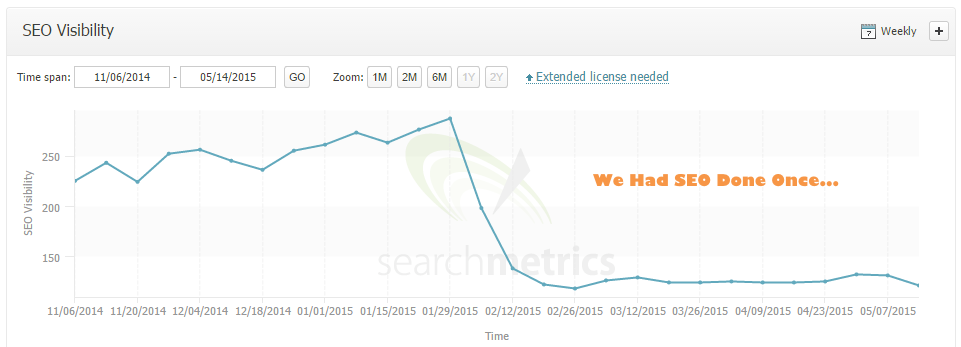
Would you ever see your physical shop or office space as being “done”? Or would you empty the bins daily, clean the carpets, tidy the desks, bring in new customers, promote your shop as being open, walk your shop floor daily, add new products to your inventory, run special offers and promotions to generate new customers and more? It is no different when looking online. The only difference comes down to choice. Each individual business either choses to invest in digital, or they don’t. Living in a digital world, you yourself will naturally research many of the products you have around you right now online in the first instance.
We Already Have a Website, Why Do We Need Another?
Is your website performing? No? Is your website mobile friendly? No? Does your website look like it was built in 1996? Yes? Your customers online are looking for a website that sells a specific product or service, is extremely easy to use, is branded very well and fits with their personal beliefs. If you website was built by your friends neighbour’s son who was taking a Dreamweaver course 10 years ago then it probably isn’t going to be relevant for your customers.
A bad website is like turning up trying to sell to potential customers unwashed, unshaven, wearing unfitted clothes with holes in and smelling like a wet dog. If you turned up in person to sell to potential customers like this, how do you think they would react? And how is this different online?
Your website is your digital shop front, make it count and engage with your audience. Website visitors want to see that you care, that you are there to help them accomplish their goal, that you are only a phone call away from being able to answer their queries and that you actually want new customers. A bad website simply pushes people away.
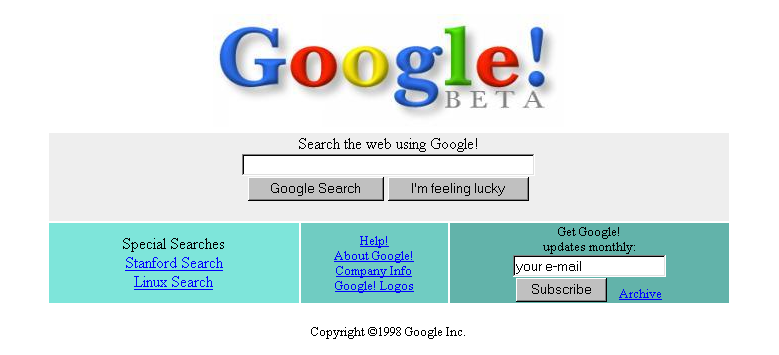
A good website builds loyal customers over time. Your website may not look as bad as Google’s did back in 1998 (although we have seen some that do come close!). Do you think Google would be as popular today if they didn’t invest in their website seriously over the past several years?
We Spent 10’s of Thousands on Our Website about 5 years
5 year is a lifetime in the digital world. Traditional civil engineering projects are often designed to last 100 years. You’re lucky if your website lasts 100 months without any input. Unfortunately spending money on digital projects does not guarantee quality. We’ve seen so many instances where companies have spent a lot of money on websites which simply haven’t delivered. Only recently have we seen a brand new website launched that is effectively telling Google to go away.
This is an unfortunate reality for many businesses, which is why we launched our Digital Lifeline packages so you can call on someone to give you solid advice about your digital activities and website technologies. Having bought a website years ago and wondering why this isn’t performing now is a little mad when you compare this to the real world. Imagine if you bought an old car from a sleazy second hand car sales man, you can picture the type, and then you decided not to get an MOT done at all, no services, any repairs were done with your own hammer, screwdriver, car manual and a bit of duck-tape where needed. How do you think your car would be performing today? Probably not very well.
Again, the same is true for your website. If you see your website as a cost, then you have already lost. If you see your website as a vehicle to increase ecommerce sales, enquiries from around the globe and ultimately revenue then you are on the right track. Imagine living out in the sticks, with only a post office and a corner shop in the village. Not a great deal of job opportunities (i.e. personal revenue). In this instance, buying a car isn’t a cost, buying a car gives you freedom to break into new markets such as cities and increase your personal revenue by getting a higher paid job. Your website is no different – when you invest in your website seriously.

Your Website Should Generate a Return on Your Investment
Have a think about this;
- If I asked you to give me a £1 coin right now, how many of you would pop one in the post to us? No-one? Why? We’re a great bunch of folk 🙂
- As a comparison, if I asked you to give me a £1 coin right now, and I would give you £2 back, how many £1 coins would you send us in the post? I’m guessing that you’d empty your bank account, right? Because you would double your money overnight.
The logic of investing in digital marketing channels is no different. The difference being between traditional marketing channels and digital marketing channels is that you can track every single detail in one of these channels, whereas you can track very little results in the other channel.
Looking at the famous quote;
“Half the money I spend on advertising is wasted; the trouble is I don’t know which half.”
I’d like to expand on this quote and be a tad facetious;
“Half the money I spend on advertising is wasted; It’s the offline half!”
Being able to track and understand how all of your marketing channels are performing will allow you to make strategic decisions to grow your business. Simply spending money aimlessly on activities that you’ve always done in business probably isn’t the best approach going forward, unless you are confident that this is already working for you.
Next Steps
We work with businesses of all shapes and sizes, some who are well versed in digital technologies and are needing support along their fast paced journey, and also companies who require a good amount of support as they are still at the start of digital journey. We will work with any business who requires our help and is ready.
The familiar quotes couldn’t be truer;
“You can lead a horse to water, but you can’t make it drink” – Quote
“When the student is ready, the teacher will appear” – Chinese proverb
“A journey of 1000 miles begins with a single step” – Chinese proverb
We’re ready to work with you and your company as soon as you are. All of the contents of this blog post are choices which people and businesses can make. People either choose to do something about their underperforming website and talk to us, or they choose to do what they have always done.
The more companies I personally speak with, the more I realise that success in the digital world is not down to our amazing work alone (although this does help!) but it is often down to the choices made by the individuals within either ambitious or struggling businesses.
Remember, all you need to do is ask we we’ll be there to help.

by Michael Cropper | Jul 1, 2015 | Digital Marketing, Thoughts, Tracking |
Why is it that so many businesses still see a website as a cost rather than an investment to generate a return? We live in a digital world so why isn’t your online presence at the forefront of your business strategy to increase revenue? Well, after speaking with thousands of businesses ranging from startups all the way up to companies with offices around the globe, I’ve noticed a few common comments and it’s time to debunk some of the common reasons we hear and get serious about your investments in digital channels.
The Current Situation
So many established businesses will happily spend money on traditional activities because that is what they have always done. The world has changed, it’s time to keep up or give up. Traditional ways that money is spent includes sponsoring awards, radio advertising, printed materials such as flyers and handouts, promotional products such as pads, pens and mugs, trade fairs, direct mail, advertisements in magazines and newspapers, printed banners, popup stands and many more methods. Money is spent in these areas without batting an eyelid. Because apparently this is what we need to run a business, right? Have you ever attempted to calculate the return you generated as a direct result of your spend on these activities? I imagine that if you have, you have also struggled to attribute any of these activities individually to a direct increase in revenue.
Let’s be clear here though, I’m not saying don’t do any of these. I’m a huge believer of testing everything and tracking the results. And yes, these activities certainly support your overall marketing strategy. But you have to ask yourself the question, if we live in a digital world, why aren’t you investing more seriously in digital channels? What are you afraid of?
If you see your website as a cost, you’ve already lost. A website should support your business goals, sales and marketing strategy and more. Your website should be a key touchpoint during the sales process or should be directly generating revenue for your business through ecommerce sales or generating enquiries.
Digital Doesn’t Work for Our Industry
Seriously? Did I just hear you correctly? I kid you not, this is something we have heard on multiple occasions.
** Takes a deep breath **
You think that digital doesn’t work in your industry? I ask you to prove to me that digital doesn’t work in your industry. I want to see all of the following that you have invested in previously and generated zero results if you truly believe that digital doesn’t work in your industry;
- Show me your Google Analytics data, how many visits are you getting per month from different traffic sources, what are these website visitors doing when they get to your website (Are they bouncing away straight away? It’s probably because you have a horrible website or you are getting low quality traffic), how many enquiries or sales are you generating through your website? (You aren’t tracking this you say?), is your website traffic increasing or decreasing every month? (You are tracking this on a regular basis aren’t you?)
- Show me how visible you are on Google when customers are searching for your key products and services? (You are tracking this data aren’t you?)
- Show me how your pay per click advertising campaigns are performing on Google AdWords (You have tested this haven’t you?)
- Show me how your social media campaigns are feeding into your digital marketing strategy to connect with key influencers and boost your brand online (You are active on social media on a regular basis aren’t you?)
- Show me how well your email marketing campaigns are performing, I want to see open rates, click through rates, popular content, active customers
- Show me your average order values and customer lifetime values per traffic source, I want to see how your individual digital marketing campaigns are performing against your traditional marketing activities. Show me the return on your investments for all of your activities.
During our initial analysis when speaking with businesses, we ask some very probing questions about the businesses we may choose to work with in the future. We want to make sure that you are ready to invest in digital seriously. We want to make sure that you are truly open to increasing your revenue through digital marketing, or whether you are simply looking at digital to dip your toe in and seeing everything as a cost and a tick box exercise.
Generally speaking, when we hear comments such as “Digital doesn’t work for our industry” there isn’t a great deal we can do to help at this stage. Let’s chat again in a couple of years when you’re ready to talk things through seriously and are more aware about how the world has changed. For those who can answer some of the basic questions outlined above, then this is where we come in to get you on the right track and get your digital marketing campaigns performing well.
We Had SEO Done Once
Search Engine Optimisation is never done. It is part of an ongoing process designed to increase organic traffic to your website over time and ultimately sales / enquiries / revenue depending on the sector you are working in. We’ve seen businesses who thought they “had SEO done” previously and decided to go no further, against our best efforts to convince them otherwise. Avoid making the same mistakes as we have seen to many other businesses make, invest in your digital channels to build long term results, rather than seeing SEO as “done”;
Would you ever see your physical shop or office space as being “done”? Or would you empty the bins daily, clean the carpets, tidy the desks, bring in new customers, promote your shop as being open, walk your shop floor daily, add new products to your inventory, run special offers and promotions to generate new customers and more? It is no different when looking online. The only difference comes down to choice. Each individual business either choses to invest in digital, or they don’t. Living in a digital world, you yourself will naturally research many of the products you have around you right now online in the first instance.
We Already Have a Website, Why Do We Need Another?
Is your website performing? No? Is your website mobile friendly? No? Does your website look like it was built in 1996? Yes? Your customers online are looking for a website that sells a specific product or service, is extremely easy to use, is branded very well and fits with their personal beliefs. If you website was built by your friends neighbour’s son who was taking a Dreamweaver course 10 years ago then it probably isn’t going to be relevant for your customers.
A bad website is like turning up trying to sell to potential customers unwashed, unshaven, wearing unfitted clothes with holes in and smelling like a wet dog. If you turned up in person to sell to potential customers like this, how do you think they would react? And how is this different online?
Your website is your digital shop front, make it count and engage with your audience. Website visitors want to see that you care, that you are there to help them accomplish their goal, that you are only a phone call away from being able to answer their queries and that you actually want new customers. A bad website simply pushes people away.
A good website builds loyal customers over time. Your website may not look as bad as Google’s did back in 1998 (although we have seen some that do come close!). Do you think Google would be as popular today if they didn’t invest in their website seriously over the past several years?
We Spent 10’s of Thousands on Our Website about 5 years
5 year is a lifetime in the digital world. Traditional civil engineering projects are often designed to last 100 years. You’re lucky if your website lasts 100 months without any input. Unfortunately spending money on digital projects does not guarantee quality. We’ve seen so many instances where companies have spent a lot of money on websites which simply haven’t delivered. Only recently have we seen a brand new website launched that is effectively telling Google to go away.
This is an unfortunate reality for many businesses, which is why we launched our Digital Lifeline packages so you can call on someone to give you solid advice about your digital activities and website technologies. Having bought a website years ago and wondering why this isn’t performing now is a little mad when you compare this to the real world. Imagine if you bought an old car from a sleazy second hand car sales man, you can picture the type, and then you decided not to get an MOT done at all, no services, any repairs were done with your own hammer, screwdriver, car manual and a bit of duck-tape where needed. How do you think your car would be performing today? Probably not very well.
Again, the same is true for your website. If you see your website as a cost, then you have already lost. If you see your website as a vehicle to increase ecommerce sales, enquiries from around the globe and ultimately revenue then you are on the right track. Imagine living out in the sticks, with only a post office and a corner shop in the village. Not a great deal of job opportunities (i.e. personal revenue). In this instance, buying a car isn’t a cost, buying a car gives you freedom to break into new markets such as cities and increase your personal revenue by getting a higher paid job. Your website is no different – when you invest in your website seriously.
Your Website Should Generate a Return on Your Investment
Have a think about this;
- If I asked you to give me a £1 coin right now, how many of you would pop one in the post to us? No-one? Why? We’re a great bunch of folk 🙂
- As a comparison, if I asked you to give me a £1 coin right now, and I would give you £2 back, how many £1 coins would you send us in the post? I’m guessing that you’d empty your bank account, right? Because you would double your money overnight.
The logic of investing in digital marketing channels is no different. The difference being between traditional marketing channels and digital marketing channels is that you can track every single detail in one of these channels, whereas you can track very little results in the other channel.
Looking at the famous quote;
“Half the money I spend on advertising is wasted; the trouble is I don’t know which half.”
I’d like to expand on this quote and be a tad facetious;
“Half the money I spend on advertising is wasted; It’s the offline half!”
Being able to track and understand how all of your marketing channels are performing will allow you to make strategic decisions to grow your business. Simply spending money aimlessly on activities that you’ve always done in business probably isn’t the best approach going forward, unless you are confident that this is already working for you.
Next Steps
We work with businesses of all shapes and sizes, some who are well versed in digital technologies and are needing support along their fast paced journey, and also companies who require a good amount of support as they are still at the start of digital journey. We will work with any business who requires our help and is ready.
The familiar quotes couldn’t be truer;
“You can lead a horse to water, but you can’t make it drink” – Quote
“When the student is ready, the teacher will appear” – Chinese proverb
“A journey of 1000 miles begins with a single step” – Chinese proverb
We’re ready to work with you and your company as soon as you are. All of the contents of this blog post are choices which people and businesses can make. People either choose to do something about their underperforming website and talk to us, or they choose to do what they have always done.
The more companies I personally speak with, the more I realise that success in the digital world is not down to our amazing work alone (although this does help!) but it is often down to the choices made by the individuals within either ambitious or struggling businesses.
Remember, all you need to do is ask we we’ll be there to help.
by Michael Cropper | Jun 29, 2015 | Uncategorized @en-us |
We’ve spotted a trend recently with many website developers utilising technologies that make it difficult for search engines to crawl and index the website. Meaning that when search engines find it difficult to understand the content of your website, that you are in a position whereby Google may either penalise your website for spammy behaviours or simply losing a significant portion of the traffic to your website and ultimately revenue too. Clearly for websites that are generating a lot of visits from search engines, if this suddenly dropped off, how much revenue would you lose out on?
The trend we have spotted is around using JavaScript technologies which are inhibiting search engines from crawling websites. So while a new website may look flashy and all-singing-all-dancing, but if the new website cannot be easily crawled by search engines then quite simply you are going to be losing a lot of organic traffic to your website and ultimately sales / enquiries. Don’t make the same mistake that so many website developers do and use the latest technology without thinking through the consequences of what this means for your overall digital marketing strategy.
Common Problems
The common problems we are seeing more frequently at the minute are with developers using JavaScript technology which often looks nice for users. From a search engines perspective, JavaScript technology is difficult to crawl which can confuse the search engines and would always be recommended to avoid.
As a prime example, a local business recently re-launched their ecommerce website which certainly looked pretty but when viewing the website with JavaScript turned off (as Google would see it), then there is no content to display at all;

A website that looks good but can’t be indexed to Google is the equivalent of having a beautiful shop on the high street and keeping your doors locked at all times – you aren’t going to be generating any sales. For this business specifically, they have been notified of the issue and are working to fix the problem. Let’s be clear though, this is the exact reason why it is important that you are working with the right digital agency who understands how each piece of the digital marketing jigsaw fits together. A good looking website is often not the same as a good performing website. Good performing websites think about usability, functionality, SEO, PPC, Email Marketing, Conversion Rate Optimisation and more.
Why this is a problem for search engines
Developers love to use new technology, but this isn’t always the right decision to make. As a nice comparison, if a new website removed the traditional login username and password and instead replaced this with fingerprint scanning technology to access the website, which is possible. Sounds like a fun and exciting thing to play around with, right? But when you dig a little deeper, this means that only those with the latest Samsung Galaxy phones and certain specialist laptops would be able to use this technology, forcing everyone else away.
There is always a place for new technology and we would always encourage people to experiment with new technology to lead the way in their industry. That being said, you cannot do this at the expense of forcing people to use this technology if they don’t have the means to do so.
The same is true for Google. Search engines cannot easily index content that is powered by JavaScript. Which means that all pages on your website need to be accessible when JavaScript is turned off. Google recently updated their official guidelines on the topic which states that websites should be developed using Progressive Enhancement. So while some of your JavaScript based content may be being found by Google, it would always be recommended to follow Google’s guidelines on the topic to improve the chances of benefitting the website in terms of SEO;
What is Progressive Enhancement?
So what exactly is progressive enhancement? Well it comes down to creating a website (or mobile app) that can be run on all devices easily with basic functionality. Then if a certain device has a specific piece of functionality or technology, then you can enhance the usability of the website based on this technology. Most importantly, don’t assume that everyone accessing your website has all of the technology available that you think they do.
For example, how many times have you been prompted when accessing a website from your laptop which asks if it is OK if this website uses your location?

While this technology can certainly work on website, it is often rather inaccurate due to the way your location is essentially guessed based on several factors. Compared with the GPS signal from your mobile phone which is accurate to within a few feet of your location. This is a prime example of when progressive enhancement would be used, with a baseline set of website features not using the Geolocation and only asking the user if you can use their location when they are accessing from a mobile device. People accessing services through their mobile device are used to giving websites their location in return for some form of added features or functionality. As an obvious example, Google Maps clearly needs your location to help you get from A to B.
From a search engines perspective, it is important to use progressive enhancement at all times to ensure that they can easily crawl and index your website and content. Far too often are JavaScript based websites (and Flash websites back in the day!) are built without thinking about how Google is going to be able to crawl them. When using progressive enhancement, this ensures that the baseline website is still accessible to Google when JavaScript is turned off.
Progressive enhancement is not only recommended by Google, but it is also recommended by the wider community opposed to the older approach of graceful degradation. The reason behind this is because it provides a much better user experience when people are accessing a website from a variety of devices with multiple technologies.
As a simple summary of the above, all modern smartphones come built with GPS, accelerometers, gyroscopes, compasses, barometers and more. Whereas most laptops and desktop computers don’t have any of these technologies built in by default. Any website that depends on technology for key features or functionality that not everyone has is doomed to fail.
How to Test
To check your own website is displaying correctly for Google, turn JavaScript off in your web browser and navigate around your website. If you can’t easily access all parts of your website with JavaScript turned off, then the chances are that search engines are also having difficulty. While it is true that Google does attempt to index JavaScript based content, they do still find it difficult which is why they recommend progressive enhancement their self.
Removing any ambiguity from your website means that Google will be able to crawl and index your website with ease. It is easy for Google to assume that you are showing one version of content to the user and another version of content to search engines – for which websites can be penalised for this behaviour. Always use progressive enhancement as a way to develop websites effectively.
If you need any tips, advice or pointers related to the technology your website is using then get in touch. We have a range of services to support your individual needs, from starter Digital Lifeline support packages to our high end consultancy packages designed to be tailored to your every need.
by Michael Cropper | Jun 29, 2015 | Developer, Digital Marketing, SEO, Technical |
We’ve spotted a trend recently with many website developers utilising technologies that make it difficult for search engines to crawl and index the website. Meaning that when search engines find it difficult to understand the content of your website, that you are in a position whereby Google may either penalise your website for spammy behaviours or simply losing a significant portion of the traffic to your website and ultimately revenue too. Clearly for websites that are generating a lot of visits from search engines, if this suddenly dropped off, how much revenue would you lose out on?
The trend we have spotted is around using JavaScript technologies which are inhibiting search engines from crawling websites. So while a new website may look flashy and all-singing-all-dancing, but if the new website cannot be easily crawled by search engines then quite simply you are going to be losing a lot of organic traffic to your website and ultimately sales / enquiries. Don’t make the same mistake that so many website developers do and use the latest technology without thinking through the consequences of what this means for your overall digital marketing strategy.
Common Problems
The common problems we are seeing more frequently at the minute are with developers using JavaScript technology which often looks nice for users. From a search engines perspective, JavaScript technology is difficult to crawl which can confuse the search engines and would always be recommended to avoid.
As a prime example, a local business recently re-launched their ecommerce website which certainly looked pretty but when viewing the website with JavaScript turned off (as Google would see it), then there is no content to display at all;
A website that looks good but can’t be indexed to Google is the equivalent of having a beautiful shop on the high street and keeping your doors locked at all times – you aren’t going to be generating any sales. For this business specifically, they have been notified of the issue and are working to fix the problem. Let’s be clear though, this is the exact reason why it is important that you are working with the right digital agency who understands how each piece of the digital marketing jigsaw fits together. A good looking website is often not the same as a good performing website. Good performing websites think about usability, functionality, SEO, PPC, Email Marketing, Conversion Rate Optimisation and more.
Why this is a problem for search engines
Developers love to use new technology, but this isn’t always the right decision to make. As a nice comparison, if a new website removed the traditional login username and password and instead replaced this with fingerprint scanning technology to access the website, which is possible. Sounds like a fun and exciting thing to play around with, right? But when you dig a little deeper, this means that only those with the latest Samsung Galaxy phones and certain specialist laptops would be able to use this technology, forcing everyone else away.
There is always a place for new technology and we would always encourage people to experiment with new technology to lead the way in their industry. That being said, you cannot do this at the expense of forcing people to use this technology if they don’t have the means to do so.
The same is true for Google. Search engines cannot easily index content that is powered by JavaScript. Which means that all pages on your website need to be accessible when JavaScript is turned off. Google recently updated their official guidelines on the topic which states that websites should be developed using Progressive Enhancement. So while some of your JavaScript based content may be being found by Google, it would always be recommended to follow Google’s guidelines on the topic to improve the chances of benefitting the website in terms of SEO;
What is Progressive Enhancement?
So what exactly is progressive enhancement? Well it comes down to creating a website (or mobile app) that can be run on all devices easily with basic functionality. Then if a certain device has a specific piece of functionality or technology, then you can enhance the usability of the website based on this technology. Most importantly, don’t assume that everyone accessing your website has all of the technology available that you think they do.
For example, how many times have you been prompted when accessing a website from your laptop which asks if it is OK if this website uses your location?
While this technology can certainly work on website, it is often rather inaccurate due to the way your location is essentially guessed based on several factors. Compared with the GPS signal from your mobile phone which is accurate to within a few feet of your location. This is a prime example of when progressive enhancement would be used, with a baseline set of website features not using the Geolocation and only asking the user if you can use their location when they are accessing from a mobile device. People accessing services through their mobile device are used to giving websites their location in return for some form of added features or functionality. As an obvious example, Google Maps clearly needs your location to help you get from A to B.
From a search engines perspective, it is important to use progressive enhancement at all times to ensure that they can easily crawl and index your website and content. Far too often are JavaScript based websites (and Flash websites back in the day!) are built without thinking about how Google is going to be able to crawl them. When using progressive enhancement, this ensures that the baseline website is still accessible to Google when JavaScript is turned off.
Progressive enhancement is not only recommended by Google, but it is also recommended by the wider community opposed to the older approach of graceful degradation. The reason behind this is because it provides a much better user experience when people are accessing a website from a variety of devices with multiple technologies.
As a simple summary of the above, all modern smartphones come built with GPS, accelerometers, gyroscopes, compasses, barometers and more. Whereas most laptops and desktop computers don’t have any of these technologies built in by default. Any website that depends on technology for key features or functionality that not everyone has is doomed to fail.
How to Test
To check your own website is displaying correctly for Google, turn JavaScript off in your web browser and navigate around your website. If you can’t easily access all parts of your website with JavaScript turned off, then the chances are that search engines are also having difficulty. While it is true that Google does attempt to index JavaScript based content, they do still find it difficult which is why they recommend progressive enhancement their self.
Removing any ambiguity from your website means that Google will be able to crawl and index your website with ease. It is easy for Google to assume that you are showing one version of content to the user and another version of content to search engines – for which websites can be penalised for this behaviour. Always use progressive enhancement as a way to develop websites effectively.
If you need any tips, advice or pointers related to the technology your website is using then get in touch. We have a range of services to support your individual needs, from starter Digital Lifeline support packages to our high end consultancy packages designed to be tailored to your every need.
by Michael Cropper | Jun 18, 2015 | SEO |
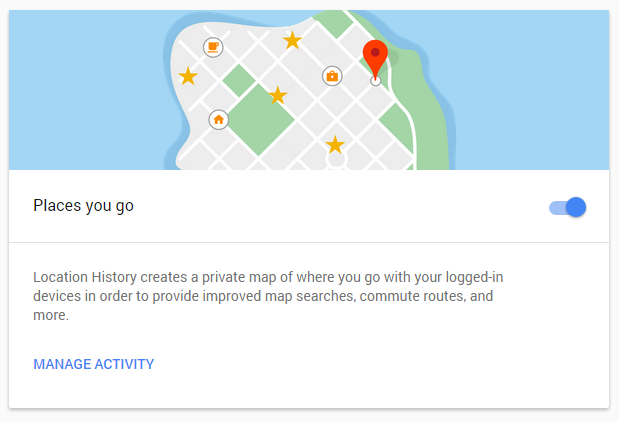
Did you know that Google is tracking your every single move? No? Most people don’t, yet they are;

The above is where I have personally been recently while out and about on the road visiting businesses which is naturally a large part of the work that I do. This isn’t some feature that I have personally set up. No, this is something which Google has enabled by default and means that they are tracking my every move, and yours too. I’m sure there will be some small print in the terms of use somewhere but this isn’t the point.
Google is not alone in this activity. Back in 2012, Apple were found out to be tracking users without permission. With the rise of smart technology such as phones and tablets, which have many sensing devices built in, there needs to be a much easier way for users to understand what data is being tracked and how this is being used.
Check what Google knows about where you have been recently
To see what Google knows about where you have been recently, click the above link and sign into the (or one of the..) Google Accounts that you are signed into on your mobile phone. You’ll be surprised at what you can see!
Clear Permissions and User Control
Currently it is not clear for users what data is being tracked by the majority of software and apps that you are using on your mobile devices. The industry as a whole needs to take more responsibility for privacy and security related issues. Google has recently launched Google My Account which is designed to take this a step closer to where we need to be, although I’m not sure this going far enough;
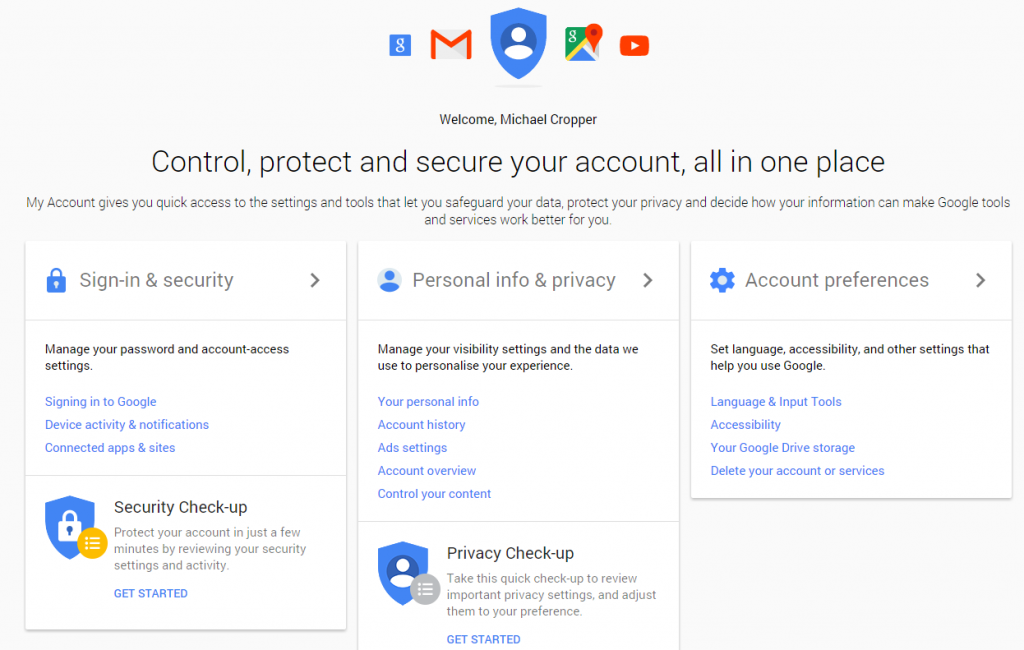
If you are concerned about what information Google is tracking about you, it would be recommended to check through the settings for all of your Google Accounts within the My Account feature that has recently launched. Specifically where you can turn off the feature for how Google is tracking your every move if you feel this is a little too invasive into your life. Simply navigate to the Personal Info & Privacy page, then scroll down to the Places You Go section to turn this off;
Privacy
The amount of data that is being collected about everyone on a daily basis is enormous. Data that can ultimately be used for advertising purposes, sold to other companies or even stolen by cyber criminals. There are already rules in place around data security including the Data Protection Act which states that any information stored must be;
- used fairly and lawfully
- used for limited, specifically stated purposes
- used in a way that is adequate, relevant and not excessive
- accurate
- kept for no longer than is absolutely necessary
- handled according to people’s data protection rights
- kept safe and secure
- not transferred outside the UK without adequate protection
There is stronger legal protection for more sensitive information, such as:
- ethnic background
- political opinions
- religious beliefs
- health
- sexual health
- criminal records
What is interesting when comparing the above with what is actually happening in the world, it takes no legal expert to raise a few eyebrows at the disparity between the rules and reality. What is clear though is that there needs to be a much more thorough and clear process in place for all data stored about people by large organisations. When comparing this to a real world context, if you were being followed around all day, every day, by a private investigator how would you feel?