That’s right, we’re now a Purple WiFi Authorised Reseller! You may be wondering just exactly what Purple WiFi is and why we have chosen to work with Purple WiFi. Before we go into that, let’s just look into the near future to see where the world is heading.
At some point in the near future, all business will start with some form of digital interaction. Whether this is business to business or business to consumer, or what is starting to be referred to as person to person. With smart technologies creeping into our daily lives from Google Glass, the Oculus Rift and a 3D printed mini me, we are seeing traditional online and offline areas blending into one. No longer is ‘digital’ a marketing channel that is completely separate to core business. For many businesses, ‘digital’ is becoming core business as brands start to interact with customers at every step along the way, from visiting physical stores to purchasing products on the website to connecting with customers on social media. Everything is digital.
For this reason, we predict that in the very near future, brands are simply going to have to join the dots for customers between all touch points, regardless of whether this is online or in the real world. That is why we have become a Purple WiFi Authorised Reseller, because the software is capable of joining these dots together which we believe are becoming increasingly important. Joining the online and offline worlds together in a way that has traditionally been extremely difficult for brands to do is now possible.
What is Purple WiFi?
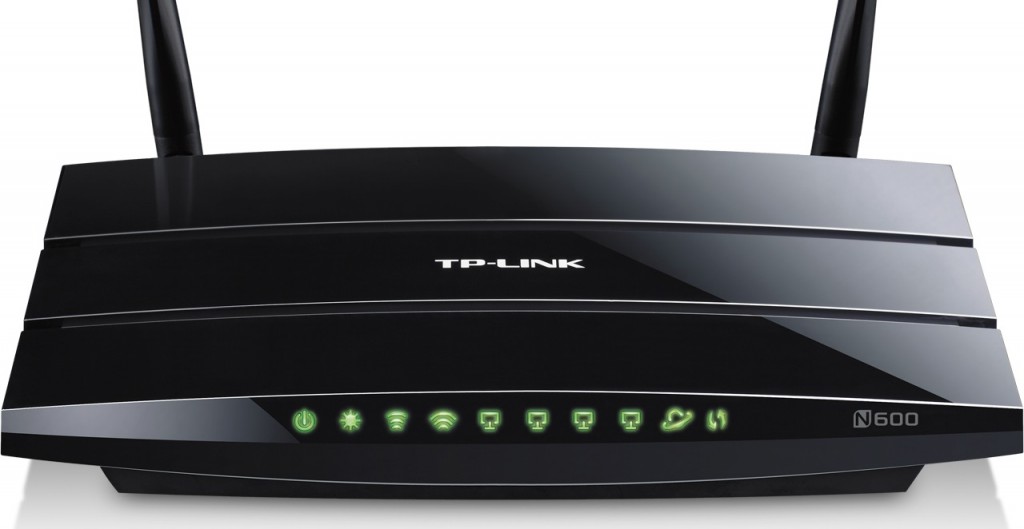
Purple WiFi is extremely advanced and cutting edge technology that is designed to turn the current free WiFi in your premises into a marketing tool to directly increase revenue. To keep this really simple, Purple WiFi is a piece of software that is installed on your router (the ‘thing’ that connects your customers to the internet).
It is this software that gives your free WiFi the boost that is needed to which customers are in your premises, how many times they have visited before and how long they have stayed. In addition, you can see full customer demographic data including name, age, gender, email address and hometown. All of this amazing data allows you to understand who your customers are better than ever and communicate with them to increase the frequency of their visits. Get in touch with us to see a full list of the amazing demographic data you can capture with the tool or to request a demo.
Essentially, if a customer visits your venue once per month and we can turn this into them visiting once every two weeks through targeted email marketing, then this has doubled your revenue per head for that specific customer. It isn’t always about getting ‘new’ customers through the door, if you can achieve the same revenue growth from your current customers then this is also a good opportunity.
Why we have chosen to work with Purple WiFi?
Quite simply, Purple WiFi are the leading players in the market providing this software who are working extensively with global hardware manufacturers including Cisco, Linksys, NetGear, TP-Link, Cisco Meraki, Deliberant, HP, Mikrotik, Open-Mesh, Ruckus, Xirrus, Airtight Networks, Buffalo, Trendnet and Ubiquiti.
The Purple WiFi software works on the leading hardware solutions for your wireless network, meaning that you can be confident that you can start to benefit from this software sooner rather than later.
Turning Purple WiFi into our WiFi Marketing and Analytics Service
Purple WiFi on its own is great, but as with anything, if you don’t use the tool to its full advantage then you won’t get the most out of it. After speaking with a lot of businesses ranging from bars and restaurants to bowling alleys and shopping centres, one of the common themes coming from discussions is around the time it will take to manage the platform.
This is why we have created a service around Purple WiFi which we call ‘WiFi Marketing and Analytics’. It is this service that is designed for us to do look after the marketing part so you can focus on doing your job within the business. Instead of having to learn how to use another tool to maximise its potential, we will do that for you and use our expertise and knowledge of running multiple campaigns to get the best results for your business.
Whether you are simply looking to offer your own branded free WiFi solution for your customers, or whether you are looking to utilise this for a data capture tool, or even if you are looking for the full works to utilise all of the above and turn your free WiFi into a marketing tool to increase revenue. Whatever you are looking for, our WiFi Marketing and Analytics service can be tailored to your specific needs and we can talk you through how this works in practice within your own organisation.
Find out more about our WiFi Marketing and Analytics service over on our services page which talks you through how this works in more detail along with giving some ideal examples of how this new technology can be used to the full advantage. Purple WiFionly sell the software through authorised distributors like ourselves, so get in touch to find out how this can work for your business.
We don’t simply build websites. We work with your business to increase revenue through digital technologies, which just happens to include things like web design, search engine optimisation, pay per click advertising and now WiFi Marketing & Analytics. Get in touch if you would like to know more about how we can support the growth of your business through digital marketing and new technologies.
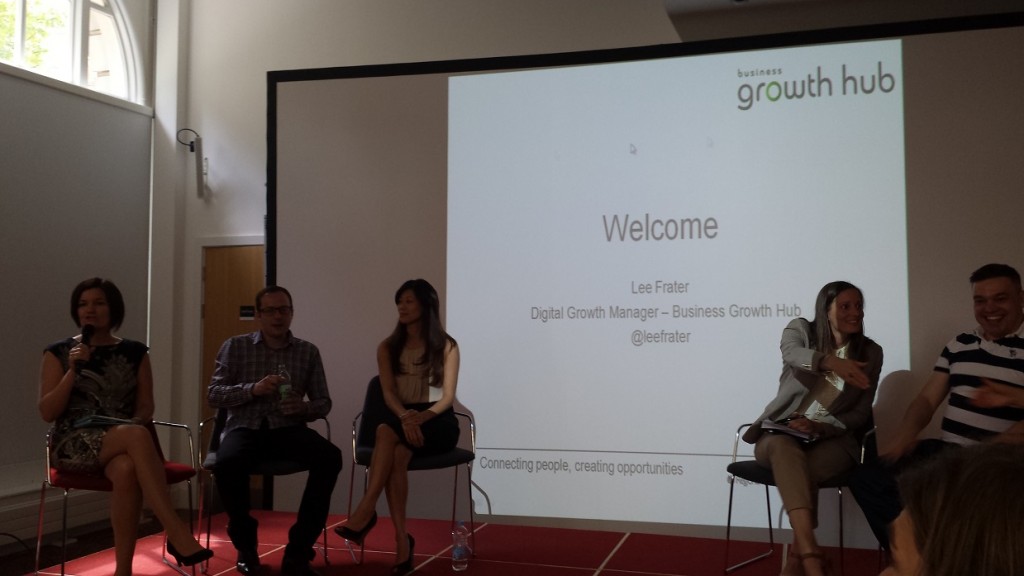
Last week we attended the Get Digital event in Manchester to look at some of the latest technology hitting the market and what this means for businesses and consumers. The event was organised by The Business Growth Hub. The organisation is designed to help ambitious businesses increase revenue through support across a range of areas. One of their key focuses is around digital and creative skills, which there is an enormous skills gap in the market. If you are based within Greater Manchester, then take a look at how they can help and also find out more about the Superconnected Cities grant where businesses can access up to £3000 towards superfast broadband.
Throughout this blog post we are going to take a look at some of the cool technology we got to play with at the Get Digital event including the Oculus Rift to Google Glass and a Bluetooth beanie. This isn’t just about the technology though, this is about how the technology is being used in the real world and the applications that this technology has for everyone. All of this technology is blending the digital and physical worlds and enriching our lives as consumers.
Oculus Rift
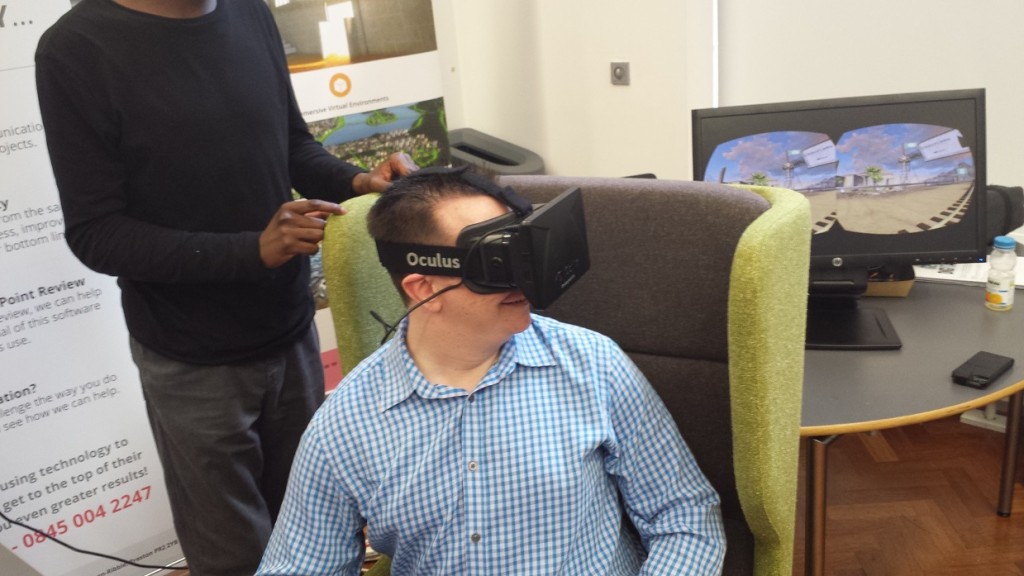
The first piece of technology we got to have a play with was the Oculus Rift. If you haven’t come across this before, the Oculus Rift is the latest virtual reality headset designed for the consumer market when it is officially launched later in the year. What you can see in the image below is me wearing a rather odd looking headset. What I am seeing inside the headset is what you can see on the screen behind with the left and right eye being slightly different views to give a true 3D immersive simulation.
The simulation was a rollercoaster which went through some amazing landscapes including past the Great Pyramids of Egypt. Lasting around 3-4 minutes till the end of the rollercoaster, it was amazing being fully immersed in the virtual environment and being able to turn my head in any direction to get a true 360 degrees view at any point within the simulation. Truly ground breaking. What was really interesting was that you could actually ‘feel’ what your eyes were seeing as the rollercoaster went down large drops. Maybe that tells you something about how I feel about rollercoasters more than anything. Very odd when you can experience something virtually and get the feelings of the rollercoaster whilst being sat still in a chair. To see this in action, this video below is a useful one which shows a similar setup on a rollercoaster;
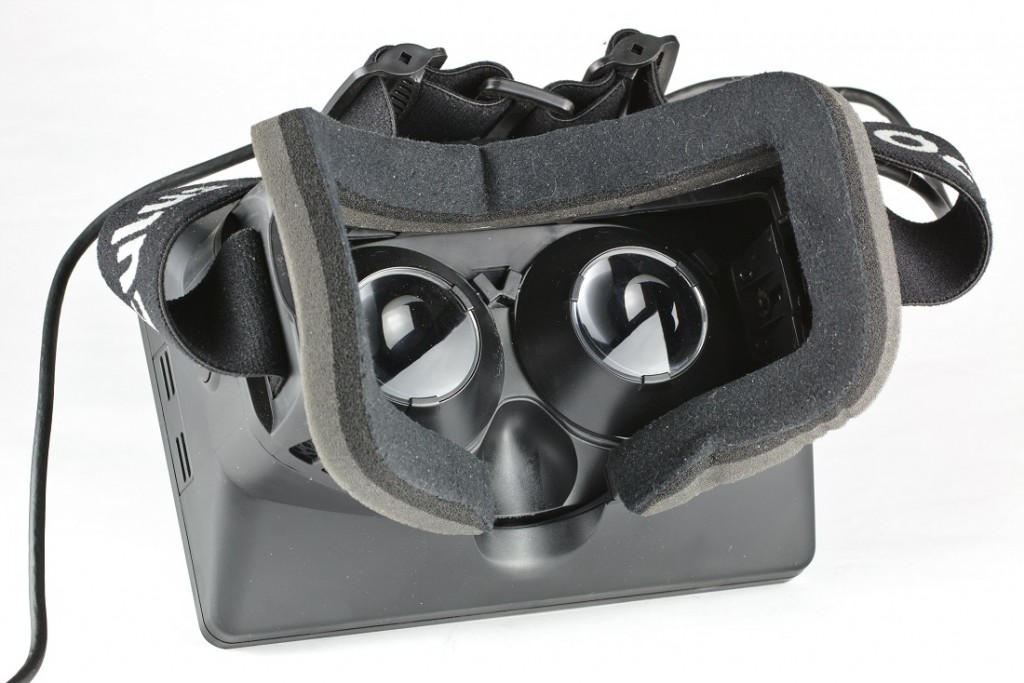
This is unlikely to ever be a replacement for the real thing, although it is interesting to think of some of the applications for this technology. Sure, the rollercoaster simulator is one that grabs your attention but think about a few other scenarios past the gaming world. Imagine a 3D 360 degree virtual tour around stunning landmarks around the world without ever having to leave your house. Imagine being able to walk through a city in a 3D world while getting a full 360 degree view of what is happening. Here is what the Oculus Rift looks like from the other end;
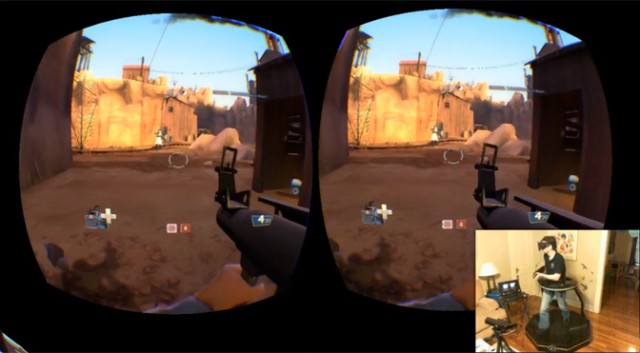
No doubt this technology will have some innovative uses in the very near future as people start to see what is possible with this. For example when joining this up with platforms that allow you to walk around a 3D environment using a device like you can see in the bottom right of the image below;
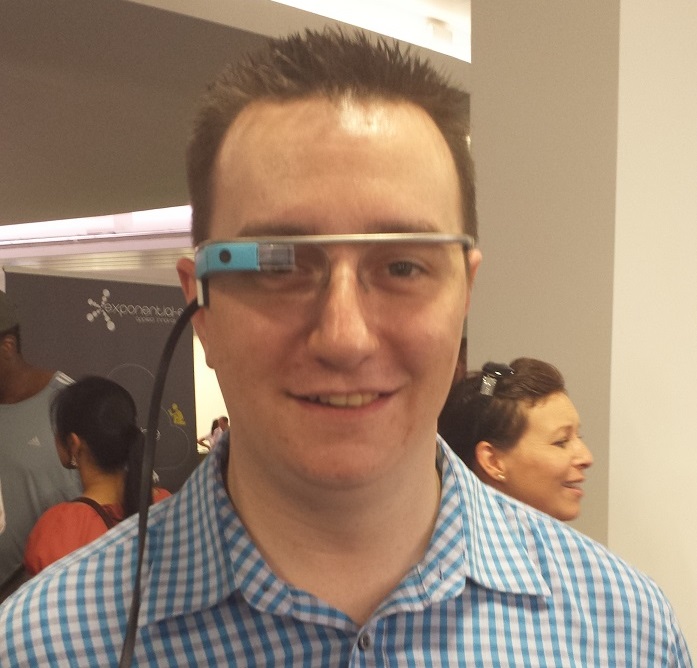
The next bit of technology we had a play with was Google Glass. I’m sure you will have heard about Google Glass before, but if not, then essentially this is a product recently launched by Google that is designed to provide information through a tiny projector within the glasses. Meaning that you can connect Google Glass to your phone and the internet to pick up on any information you can imagine. In addition, Google Glass also comes with a camera which is built in along with audio which works through bone conduction which is really interesting.
The people demonstrating Google Glass are from Manchester Metropolitan University who have recently been working with Manchester Art Gallery to look at interesting ways to enhance the experience of visitors to the gallery. You may have seen a recent article in the Manchester Evening News paper which talked about this briefly and another whereby one reporter was a little underwhelmed by the whole experience.
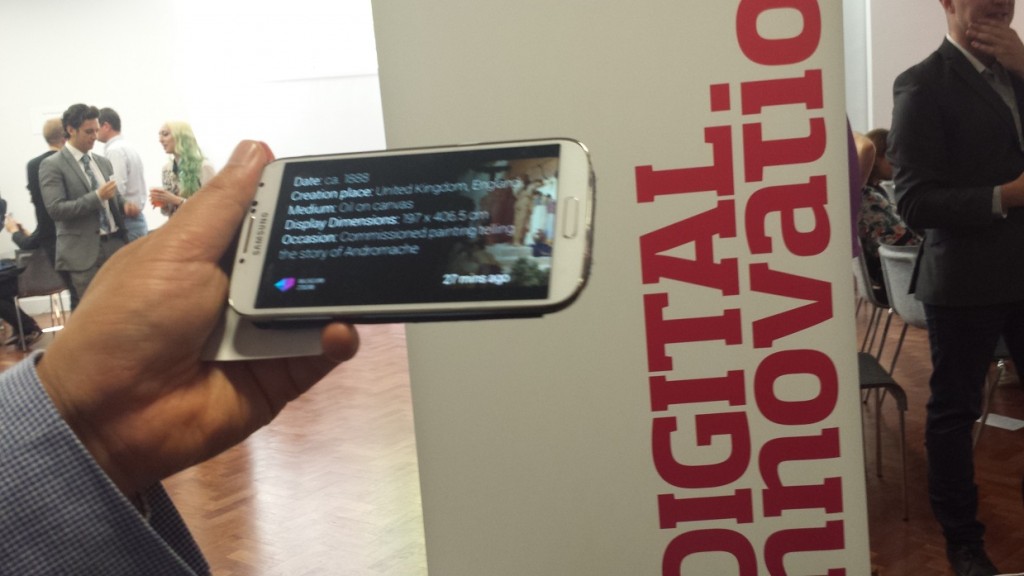
The idea behind the trial at Manchester Art Gallery is to provide visitors additional information about the paintings they are looking at such as the date the painting was created, where it was painted, the type of material used and the dimensions of the painting along with other information about the painting. Sure you can have all of this on a small placard next to the painting, although this is a single static piece of information which often doesn’t give you any context. For example, imagine being able to say “OK Glass, find more paintings in this art gallery by this artist”. This connection is how Google Glass can really enhance the experience for people.
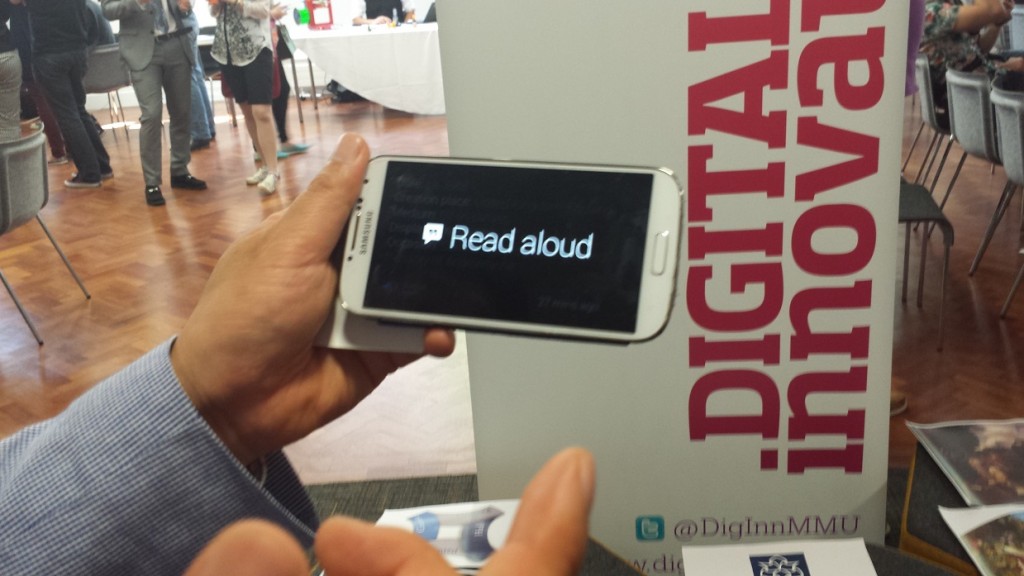
Here are a few examples of what I was seeing through Google Glass, the content on the smartphone is being beamed from Google Glass so we can see it easier when showing you here;
For example if you would like Google Glass to read information out aloud to you.
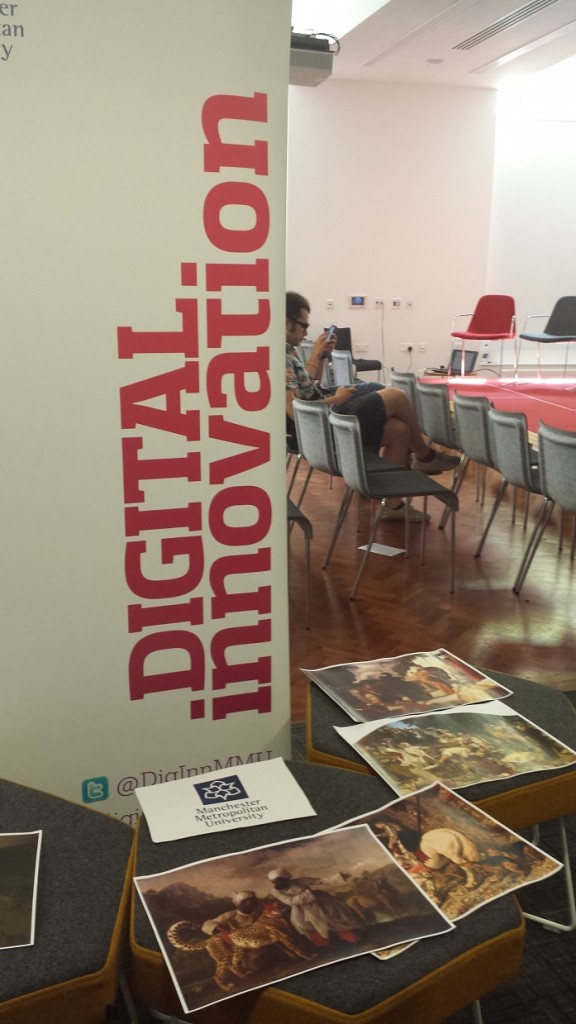
The several paintings at Manchester Art Gallery that are part of the trial.
Additional information about the painting that you are looking at.
Traditionally in art galleries if you want to find out more information about everything you would walk around with one of those clunky audio guides which quite frankly are hideous and not very user friendly. Google Glass can essentially replace these and add an extra dimension of information at the same time through the wireless connectivity with the internet.
Google Glass is essentially still in the prototype stage and it will be interesting to see how this takes off when launched fully to the public. Personally I found the experience of using it a little strange at first, although I have no doubt that as these new technologies enter our lives that we will start to get used to them as they really start to help us with what we are doing.
Bluetooth Beanie
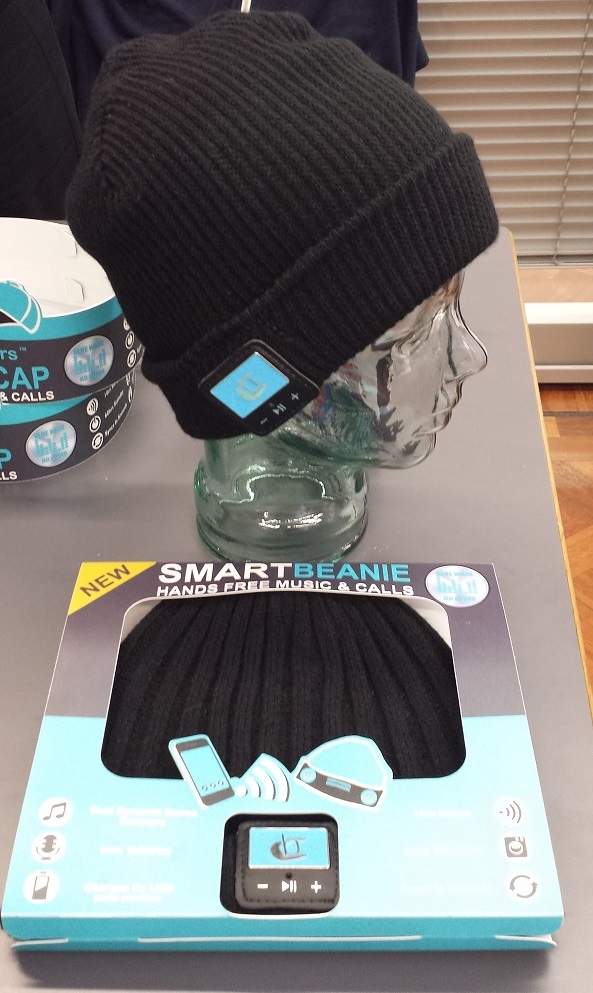
At home you have to charge your mobile phone, laptop, tablet, toothbrush and now your beanie. Introducing the Bluetooth beanie from Bluefingers. That’s right, a hat that connects to your mobile phone via Bluetooth to stream music directly into your ears. Because that tiny wire for your headphones is such a pain.
Wearable technology is breaking into the fashion world and is already starting to be looked at seriously by several large retailers both in the UK and the US. While you may be thinking, ‘why’ about a product like this right now, I can assure you that you will start to see a lot more products like this coming into the market over the next few years. Take for example with Burberry who are already embedding RFID chips into their clothing so they know when you re-visit the store again in the future.
Panel Discussion
The final part of the day included a panel discussion from startup companies who are already selling wearable technology to councils and futurologists. The discussion was titled “Future of Technology: World of technology VS the business world, education and cities’ infrastructure. Where will we be among all this? How will technology impact our everyday lives?”
Some interesting points to come from the discussion from Mike Ryan included a prediction that 33% of jobs will disappear by 2030 as computers and technology start to replace laborious jobs with systems that automate work. We just have to look at the taxi booking application Uber and the amount of uproar that has been caused from this technology throughout the world.
Another interesting point was made around education and that we cannot continue with the current model whereby we ‘learn’ for the first 18 or so years of our life then expect to use that knowledge for the rest of our careers. With how fast technology is moving and how this is having a significant impact on jobs, we need to seriously start to re-think the idea of education and start to look at a life-long learning model.
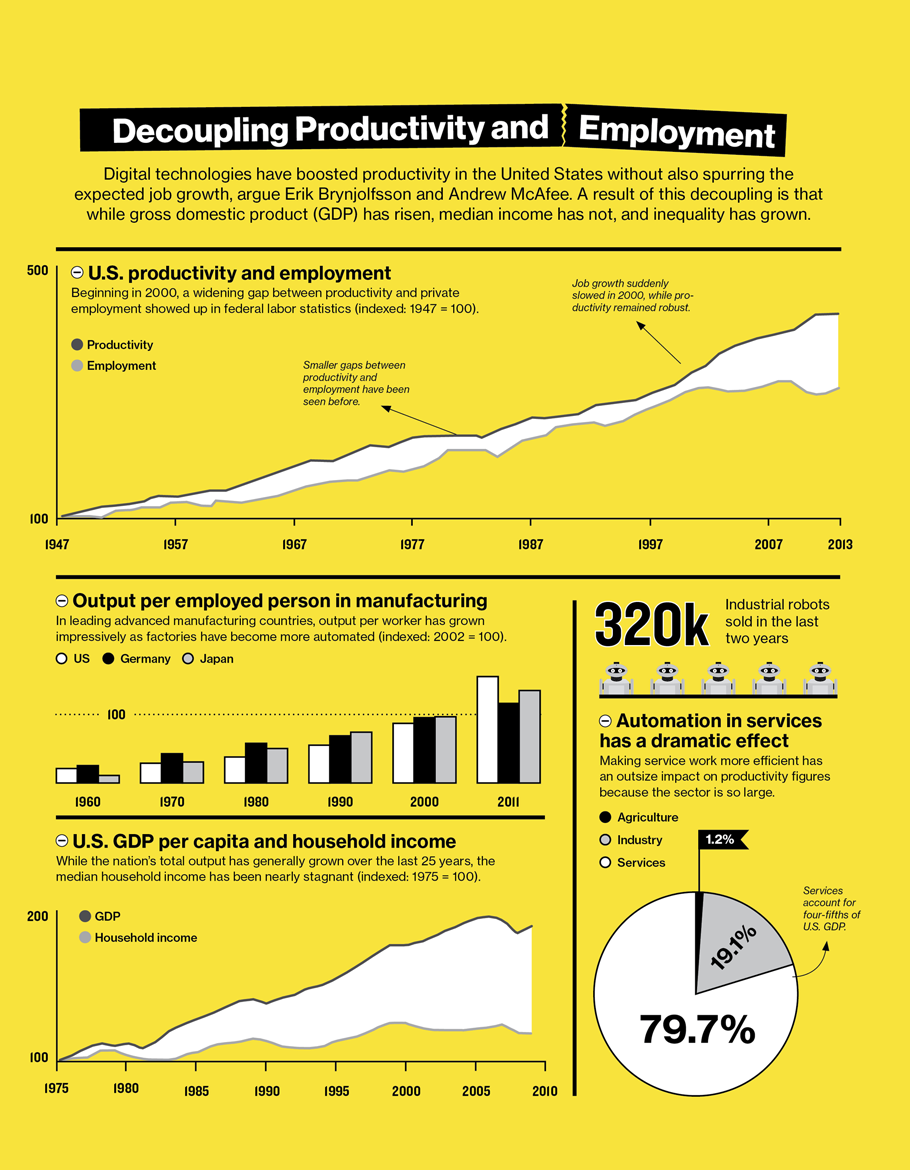
Taking this one step further, MIT recently completed some research around productivity within businesses and income for the workers. What they found was the ever increasing gap between productivity and income, meaning that as productivity and revenue increases for businesses, these increases aren’t seen by the people employed by those companies as a whole. The image below highlights this very well;
Why this is interesting is because of something known as GVA, or Gross Value Added as it is otherwise known. If you aren’t familiar with this terminology, Gross Value Added is a measure of the value of goods and services produced. Wikipedia describes GVA as;
“Over-simplistically, GVA is the grand total of all revenues, from final sales and (net) subsidies, which are incomes into businesses. Those incomes are then used to cover expenses (wages & salaries, dividends), savings (profits, depreciation), and (indirect) taxes.”
As a further simplification on the above, GVA has a direct link to job creation and job security within the economic world. GVA is the measure that is used throughout government and European funded projects to determine the ‘success’ of a project in terms of jobs created or secured. The problem here is that this is at odds with what is actually happening in the real world, specifically around how technologies are allowing companies to work more effectively while still utilising the same amount of people to accomplish that goal.
It was argued within the panel that this model needs to be seriously looked at as we are going to have a real problem in the future as technology simply replaces people’s jobs. Which links back to the idea of life-long learning so people can move away from laborious work and into something more valuable which a machine isn’t able to replicate (yet).
If you keep a close eye on the discussions in the news, you will see how there is talk around how lawyers are going to be put out of jobs with technology, how accountants are going to be put out of jobs with the likes of Xero appearing on the market and so on. While a lot of this is often scare mongering by the publications, this is a serious area that needs to be thought about. We have experienced this with clients we work with, whereby systems we have introduced have resulted in significant time savings within the business for members of staff by automating a specific function. While this is great to be able to work on projects like this, it is a growing area and one where as a society we need to start thinking about how this has an impact on what we currently measure ‘success’ on, which is jobs.
Technology and the fear of “technology taking our jobs” is nothing new. This same argument has been around for hundreds of years with the Luddites smashing stocking frames back in 1799. Although I personally believe that now we are at a time when technology is moving at such a rapid rate that we really need to start to consider how this is impacting on the society we live in. Enough of that for now though, let’s get back to looking at what other points the panel made during their discussions.
Another interesting point made by the panel was around the ‘Covent Garden Effect’ which is talking about how cities and town centres need to move away from this idea of shopping on the high street and moving into more entertainment based. Products and services are often much cheaper online than in shopping centres due to the fact that you don’t have the large overheads to pay. Turning cities into fun places to be will lead to a shift in how citizens use meeting places for fun activities for the whole family. Not simply bars and restaurants, but something livelier. It was argued that many of our cities in the UK are too bland and that we need to put some life back into them. Looking at examples of how the Dutch transform their cities into something a little more exciting. One example was around playing Tetris on the side of a building for example which has already been set up by MIT previously;
Overall, by making cities more entertaining spaces to be then we will move away from the shopping based approach and more for something for everyone to enjoy. Another example in this area was around banks and branches, how you simply don’t need thousands of branches around the country, instead you can simply have a few supercomputers. This was highlighted at a recent talk from Barclays bank whereby they talked about the systems powering the whole banking system from website, bank transactions and ATMs which is simply 4 mainframes and 2 database servers. When you think of the scale of a banking system and it is ultimately running on a few very powerful computers it makes you think about where things are heading. Traditionally this would have been a lot of people doing the same processes, but manually.
Next up was Eva Pascoe talking about digital futures. Eva was the first person to create a cyber café in London called Cyberia. An interesting point made was that we don’t currently have inclusivity with digital technology. Currently the focus is around well educated people being able to utilise digital technologies, whether that is through the high end consumer technology products or on the educational side around computer programming. The point made was that the future needs to include everyone with digital and make sure that anyone can access digital technologies with ease, regardless of how wealthy or well educated you are.
An interesting point was about how we are still people who like to share things, create communities and talk about things. This hasn’t changed with technology, it just means that the technology is allowing us to do this in a different way than before. An example given was around the new craze of Toast Art where people are sharing their artistic creations of food on social media channels, which is often referred to as ‘Food Porn’ (probably not the best idea to Google that while in work…).
Following on from this, the talk was around the environmental impact of fast fashion and how 3D printing can help to overcome some of these issues. Currently as a society we waste an awful lot when we don’t need to which is often caused by the constant desire for new and fresh things. An interesting idea was around biodegradable 3D printed shoes, which means that you can print, recycle, then print again in a new style without having to waste a lot of materials each time.
It was then mentioned about linking in city information into wearable technology like Google Glass. Imagine sending sensor information from around the city into Google Glass and Maps for exactly where the parking spaces were available. To a lesser degree, this has already been implemented over in Santander in Spain.
Following on from this, the term ‘Urban Informatics’ was brought up which essentially is all around using data to better understand how cities work. Think of this like a ‘City API’ where you can access any data about a city for whatever you need. An important point was made around privacy and that there needs to be a balance between the benefits of new technology and the privacy issues that come from this. Currently, data often belongs to the businesses that capture your information as this is a valuable asset to them. Although as a user, you are often sceptical about giving your data away for fear of how this will be used in the future. Instead, for a sustainable future in this area we need a system where the benefits are clear and privacy issues remain minimal, so the user will ultimately own their own data. Meaning that if they like, they can have any data about them removed from the system. Until this approach is in place, people will continue to distrust services that capture data as they aren’t sure how this will be used in the future.
A somewhat interesting point was made around how ‘the cloud’ is not sustainable. Every service you access on the web is cloud technology in the background. After running an ISP previously, Eva talked about how ISPs and other providers of cloud technology need to be doing more to be environmentally aware since the power consumption for running large server farms is staggering. One example given was around situating setups in cold climates to reduce energy usage on air conditioning and also situating sites near renewable energy sources such streams and rivers, very similar to how traditional cotton mills were created. Then the talk turned to the idea of a personal cloud which is already available now and is something that I expect to see more people looking at as privacy concerns are raised.
Summary
Overall the event was a great opportunity to look at some of the future technology that we are going to see coming into our lives over the next few years and how this is really going to change the way businesses and consumers interact with digital. While this technology offers a lot of benefits to us, we also have to seriously think about privacy concerns and how this impacts jobs and the economy that we live in. What we can be sure of is that technology is moving fast and companies need to be quick on their feet to compete.
The world we live in is changing faster than ever with new technologies and ever increasing customer expectations. Retail is one area that will always be at the forefront of this change as customers are often further ahead with technology than businesses.
Over recent years we have seen supermarkets significantly expand the range of products and services they offer. Food and drink, clothing, homeware, technology, entertainment, DVDs, photos, opticians, dentists, chemists, the list goes on. Now we are starting to see 3D printing technology enter the supermarket environment.
ASDA 3D Printed Mini Me
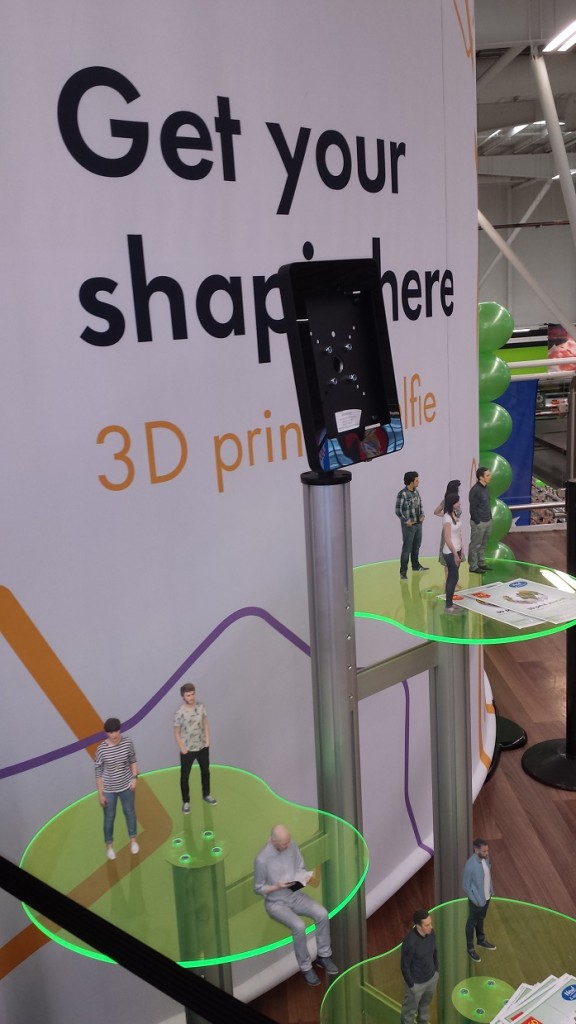
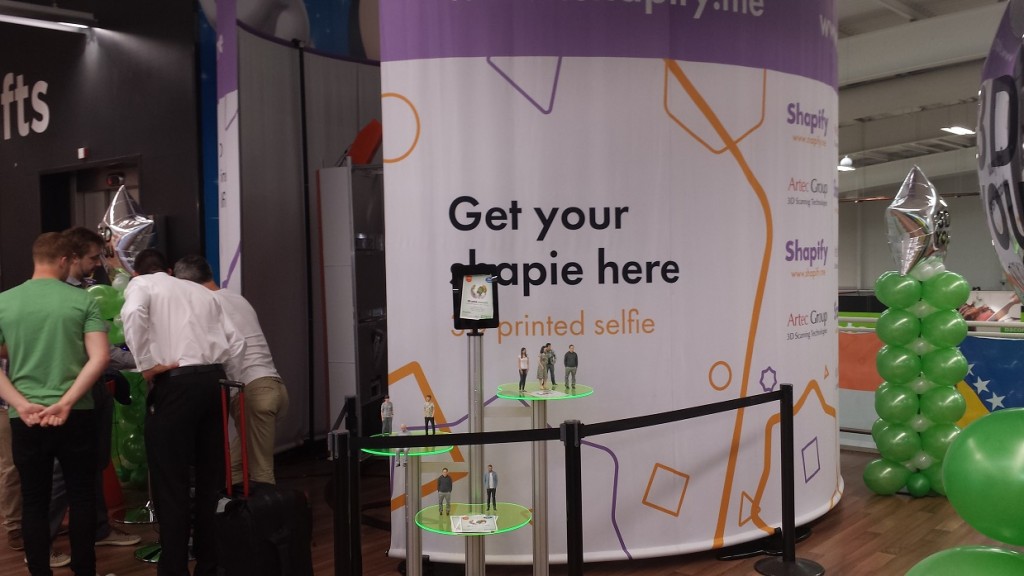
After spotting an advert on Facebook to get a 3D printed mini me only a few miles away at Trafford Park ASDA, I thought I would head down and get one done, especially since they were at the bargain price of only £60 during the trial period. The technology behind the 3D printed models is Shapify.me which can also be used to 3D scan yourself using your Kinect at home which is amazing.
This was a trial for ASDA that was running for only one week, so we couldn’t miss this opportunity to look at where this technology is heading. Especially how this technology is breaking into the supermarket customer experience. This shows that ASDA is taking this new technology seriously and is clearly testing this to see where the opportunities lie over the next few years.
Augmented Reality Mirror
Supermarkets continue to evolve and I imagine we will start to see the introduction of other really cool technology such as the augmented reality mirror that customers can use to try on make-up. Watch the cool video of this below;
How the mini me is created
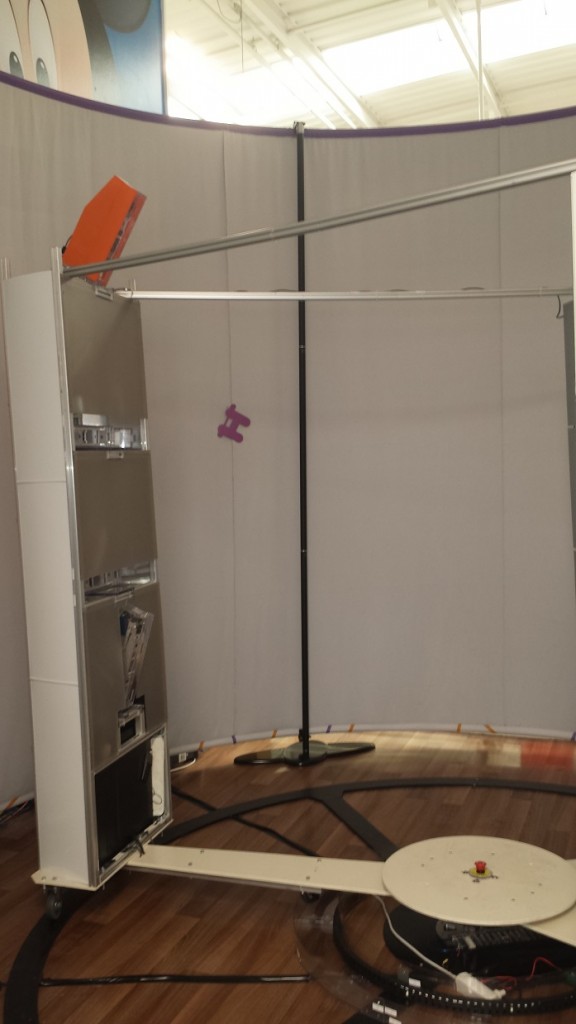
To create the mini me 3D printed character, the first stage is to step into the scanning device you can see below;
Once you step inside you stand in the middle of the contraption which then spins around you on the circular rail you can see at the bottom of the image. Staying still and focusing on the purple dot on the wall, the device spins around you taking lots of pictures and scanning you to understand the shape of you;
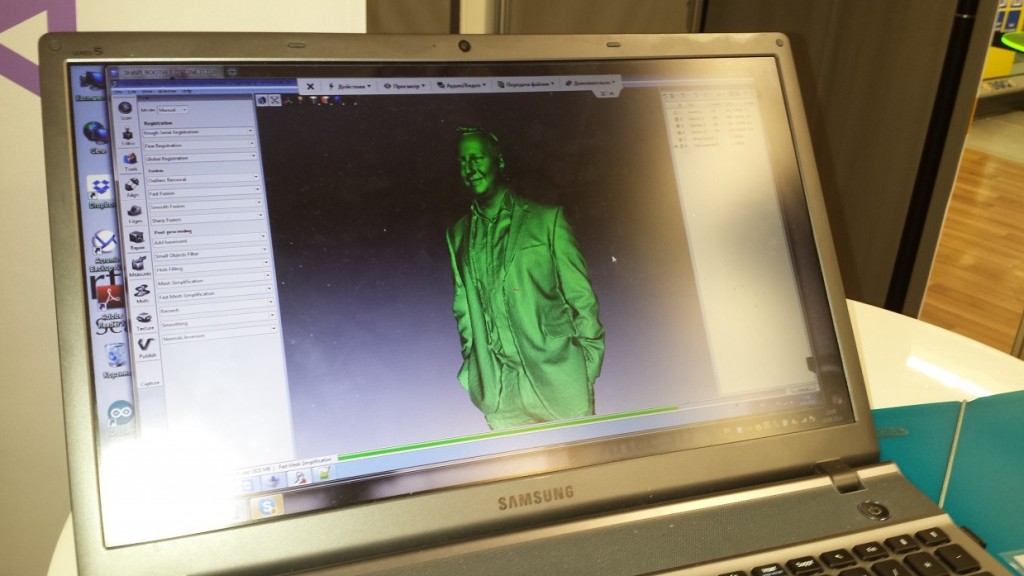
What then happens is that all of this data that has been captured about the scanned person is then fed into the computer to build a 3D model of you. Below you can see the raw data that was built from the scan of me;
The next step is for the data to be sent off to get 3D printed. Talking to the people operating the machine it was great to find out more about the underlying technology and information behind the mini me.
The 3D printed models are manufactured using an additive process, meaning that the model is built up from smaller bits opposed to carved out from a larger piece of material. I’ve previously seen these models on a recent trip to Germany, although the models were priced at around the €350 mark, which is a much larger figure than the £60 for the models in ASDA.
The difference in cost for 3D printed items simply comes down to the quality and materials that are used. For example, if you wanted a 3D mini me model in metal, then you would need to use metal powder along with a laser to bond the metal together. Both of which costs a lot more for the raw materials and also the technology to bind the material. The mini me model from ASDA is essentially made from plaster and superglue with layers built on top of each other to form the shape of the person scanned in.
What is really interesting is that the models are printed in full colour in the machine. Often with 3D printing technology such as Ultimaker you are limited to printing in one or two colours which is the reel of plastic that you are using. Going beyond a single colour with technology such as plastic 3D printing would require the printed model to undergo a paint job after the model has been printed, which would certainly add to the cost of the model.
Why would you 3D print yourself?
Why not? Seriously, this is really cool. Imagine a few different scenarios;
Printing family members as mementoes for loved ones who are going away for a while such as touring in the army or going travelling for a long time
Commemorating a significant event in your life such as winning a sporting medal, starting a new uniformed job such as in the police or fire service, or even for couples making models for their wedding cake toppers
Fashion designers wearing iconic clothes, friends celebrating a special occasion in fancy dress or wanting to keep a physical record of how your children are growing up
There are lots of fun reasons why you may want to keep a physical record of people in your life. It will certainly be interesting to see how this technology takes off over the next few years. Looking at the earlier prototypes below, it is clear that this technology has improved significantly over the last 12 months.
Earlier prototypes
This technology has been being trailed for almost 12 months now in various locations, although this is the most up to date technology we have come across. See what the early stage prototypes looked like and how the models were built;
3D Mini Me
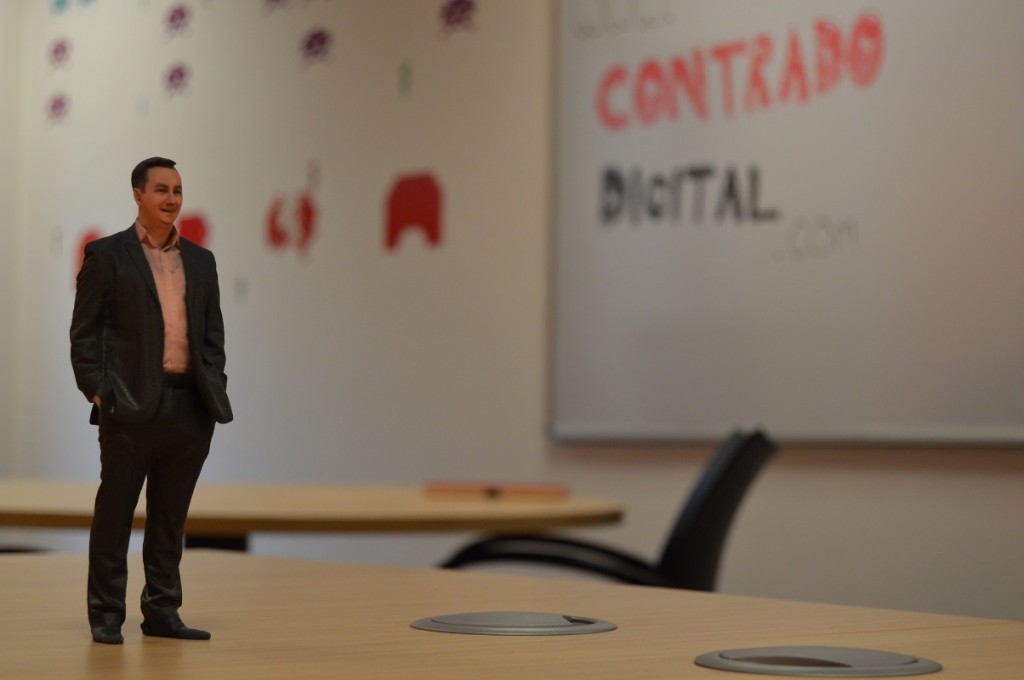
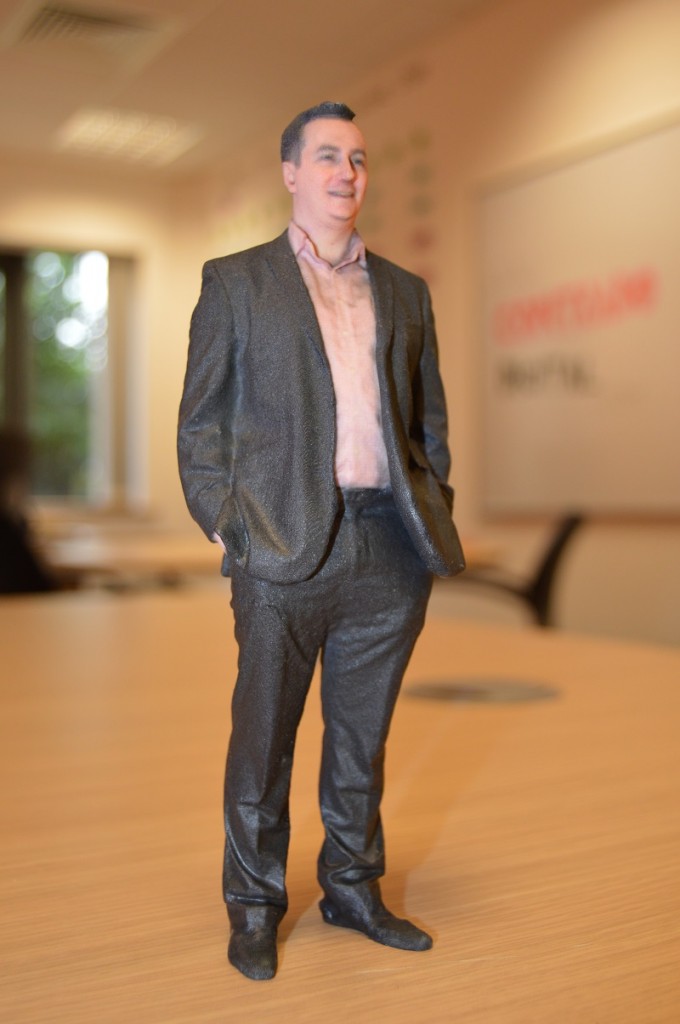
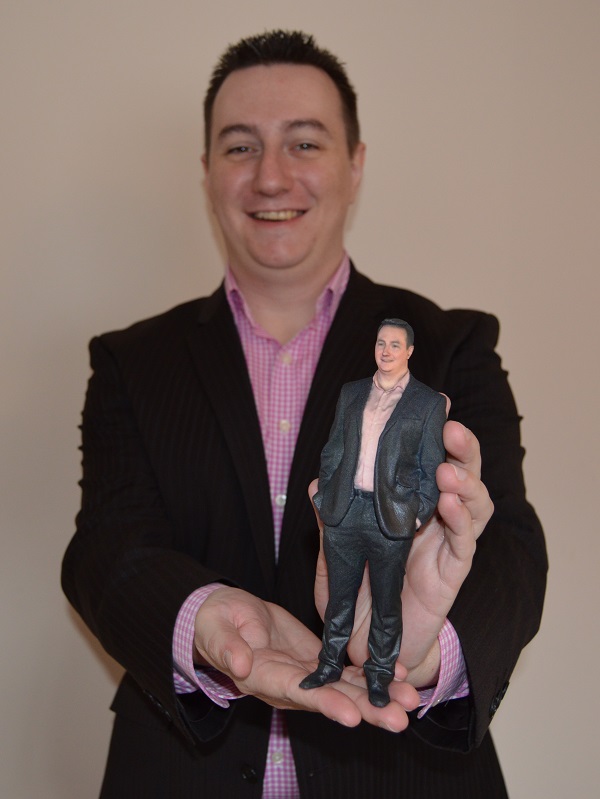
So getting to the best bit about the blog post, here is the final 3D printed mini me model;
If this was to roll out in more stores throughout the UK, would you get one done? What are your thoughts about this technology? Leave a comment below. It looks like Obama has been jumping on board with this recently too;
On a commercial note, if any companies or people are interested in this technology for creating 3D printed mini me models, then this is something that we may be willing to look at supporting if there is significant demand.
The popular ecommerce platform Magento Go is no longer accepting new signups to the service and anyone currently using the platform will have to migrate their website by 1st February 2015. Act now to keep your business website live and working to generate traffic, sales and enquiries. Failure to act will result in your website disappearing.
What is Magento Go?
You may have heard about the platform Magento already. What you may not be aware of is that there are three different types of Magento. Well there was. Now there are two. Magento is broken down into the three categories;
Magento Go: Pay monthly, hosted and managed by Magento, soon to be shut down
Magento Community Edition (CE): Free to use, self-hosted and managed by your web design agency
Magento Enterprise: Designed for high performing, fast growing ecommerce businesses
It is important to note that the announcement from Magento is only affecting the Magento Go platform and not the other versions.
Magento is an ideal ecommerce platform for your website which has been specifically designed to sell products online with ease. With over 240,000 websites being powered by Magento, it is clear to see why so many choose the platform when looking to sell products online.
The Magento Go platform was designed for small businesses to quickly start selling products online without having to understand how to build a website and all of the technical bits in the background. This can be a great starting point and is often where a lot of businesses start their journey into the digital world selling online. With Magento Go being easy to use, you would have also found that it was rather limiting in the sense that you could only customise the website so far. This is where the next step of the ladder comes into play with Magento Community Edition.
Upgrade to Magento Community Edition
Current Magento Go customers are being advised to move over to competitors of Magento Go which are BigCommerce or Shopify. Although there is another way. You chose Magento Go for a reason, you liked the platform. So why not take the next step with your website and upgrade to the Magento Community Edition platform?
The open source platform gives you full control over your ecommerce website, meaning you can customise as much as you like without limitation. No longer do you have to be restricted by what you can and can’t change on your website. The Magento Community Edition platform gives you full control to be able to do exactly what you like.
If you would like help migrating your Magento Go website onto the Magento Community Edition platform, or even an alternative, then get in touch and we can identify which is the best solution for your business. For a lot of businesses, large changes like this can be a challenge to migrate, so we’re more than happy to discuss the options with you. We also have a demo Magento platform set up so we can give you a live demonstration for how the platform works so you can see for yourself before making any decisions.
Last week was the infamous annual Google I/O 2014 conference in San Francisco which talked about where the company is heading and what new cool products they are launching. Kindly, Tech Hub Manchester put on an event to live stream the sessions for us across the pond to watch. With so many announcements from the day, this really is an exciting time to be involved with digital and this presents a huge opportunity for businesses.
Starting the day, one of the interesting announcements was the sheer scale of Google’s Android platform, with over 1 billion monthly active users on the platform globally. That is 1/7th of the population of the planet which is absolutely staggering.
1 billion #Android devices out in the world. That’s something like 93 million selfies taken every day … give or take #io14
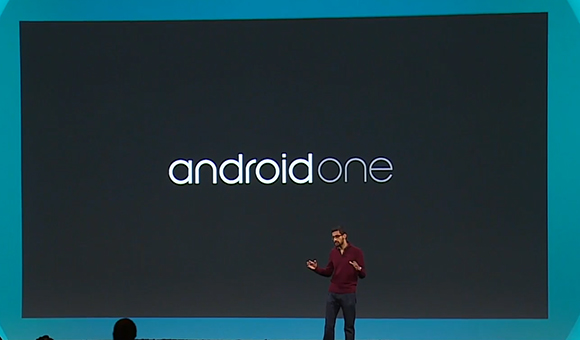
For most people reading this post, this isn’t going to have much of an impact. Android One is a set of guidelines for smartphone manufacturers who are creating budget smartphones. The guidelines are designed to outline the minimum hardware specifications to be able to run the Android platform efficiently.
These guidelines have been developed to increase the number of budget devices running the Android platform in developing countries around the world. With the first devices being built by several manufacturers arriving in India very soon.
Android Wear
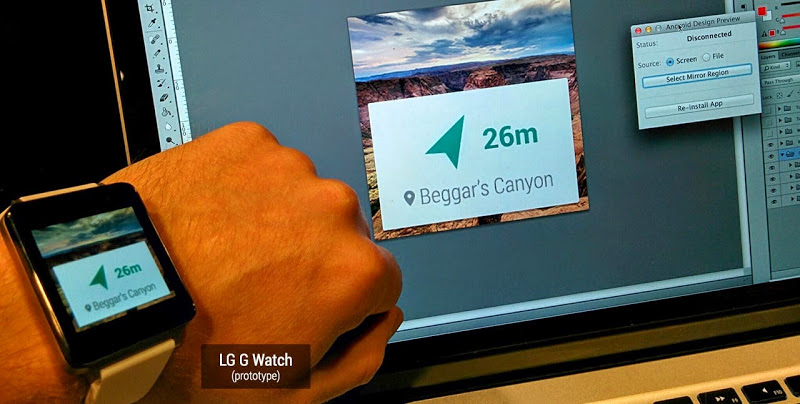
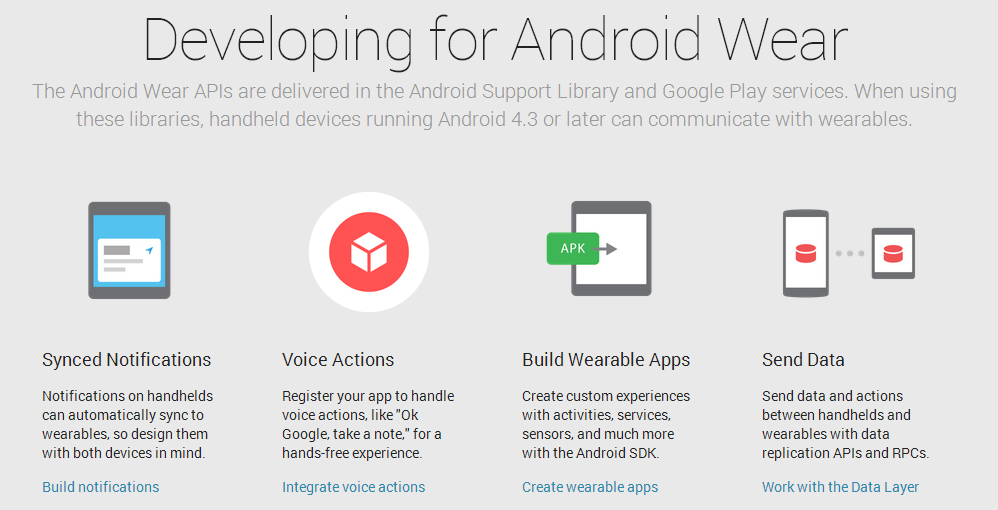
For us, this is one of the most exciting announcements of the day. I’m sure everyone has started to see Google Glass in the news. More recently, various manufacturers have been creating Smart Watches too. Android Wear is an extension to the current Android platform that has been designed specifically for wearable devices and technology.
This technology has been floating around for a short while now, although it hasn’t been open to developers on scale. The announcement was that this new platform is open for developers to access, meaning that if you want to look at using this new technology as a business then it is now possible to start building really cool things for your customers.
To summarise the Android Wear platform, it is essentially designed to link up your smart devices such as watches and Google Glass to your mobile phone and send data back and forth with ease. The idea being that you now no longer have to keep getting your phone out of your pocket to find out what the latest ‘buzz’ was informing you about, instead you can simply glance at your smart watch to get the information you need with ease.
An interesting idea that Google is currently working on with this technology is to add a layer of security which will save you time. Around 15% of people use pin numbers on their mobile phones to protect themselves which is a huge amount of time wasted every day unlocking your phone, especially when the average person looks at their phone around 125 times per day. Instead, Google talked about the idea of a ‘safe zone’ for technology based on other technology that is surrounding it along with geo location information.
For example, imagine if you didn’t have to enter in your pin number of password every time you looked at your phone. Instead, your phone would be able to detect your smart watch and understand that it is safe to unlock the phone without needing to enter in the password. Saving a lot of time and making your interaction with the technology much simpler. Likewise, imagine if your laptop knew you were in a safe location such as the home or office, and that it was you accessing the device based on the proximity of your smart watch to the device, then you wouldn’t need to enter in your password each time.
There are quite a few potential pitfalls with this idea which I have no doubt will be ironed out before an official release. It is really interesting to hear where Google is heading with this technology and looking at what this means for the future of how people interact seamlessly and securely with digital technologies.
Enhancing the Mobile Web by Scanning Apps
The mobile web has been growing at an exponential rate over the last few years and this is an area that Google continues to see as a huge opportunity for the future. The traditional approach for businesses related to the mobile web is around creating a mobile website (i.e. m.website.com), creating a responsive website, creating a mobile app or a mixture of all of these.
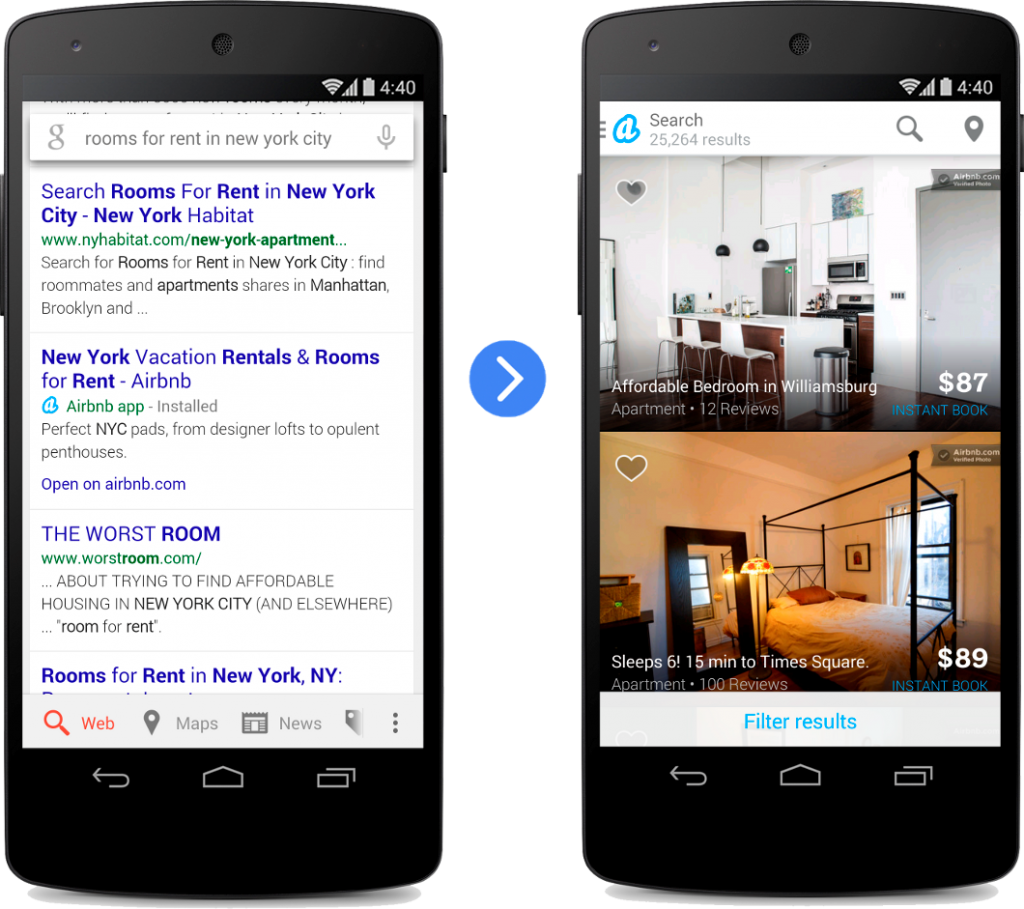
This has led to a compartmentalised approach which isn’t a great experience for the user. Understanding this, Google announced that they are now scanning mobile applications for businesses who have mobile apps and will be displaying this within the search engine results pages when you search on Google. For example, with the Airbnb app below, Google knows that you have this app installed on your mobile device and will direct you to their mobile app when you click on their listing within the search results;
Looking beyond this, Google also announced a new feature within Android which allows users to multitask better. Allowing users to easily switch between open tabs in Google Chrome and open mobile applications on your device. It has always been easy to switch between tabs on Google Chrome on your mobile phone, but not so easy to switch between open apps. Now it is. This is another improvement to the user experience for customers interacting with your brand online.
If you do have a mobile application and want to find out more about what is needed to allow your customers to open your mobile app directly from Google’s search results, then get in touch and we can guide you through this process.
Seamless Experience & Contextually Aware
The two announcements mentioned above so far are all designed to create a seamless experience for customers, regardless of what technology or device people are using. Everything is designed around the user to enhance their lives in one way or another.
The next area Google focused on was around contextually aware devices which would present information to you as a user based on where you are and what is going on around you. Very similar to trends talked about at the recent BIG2014 digital conference as smarter technology enters the market.
To summarise, the main points included around devices being contextually aware so the devices understand what is happening right now, being voice enabled so you can continue working on what you are doing without using your hands such with cooking and driving. Then finally talking about a seamless experience allowing you to pick up where you left off, again on whatever device. This technology relies completely on everything being cloud based so your data and information can be easily accessed from a smartphone, laptop or tablet with ease.
Android Auto
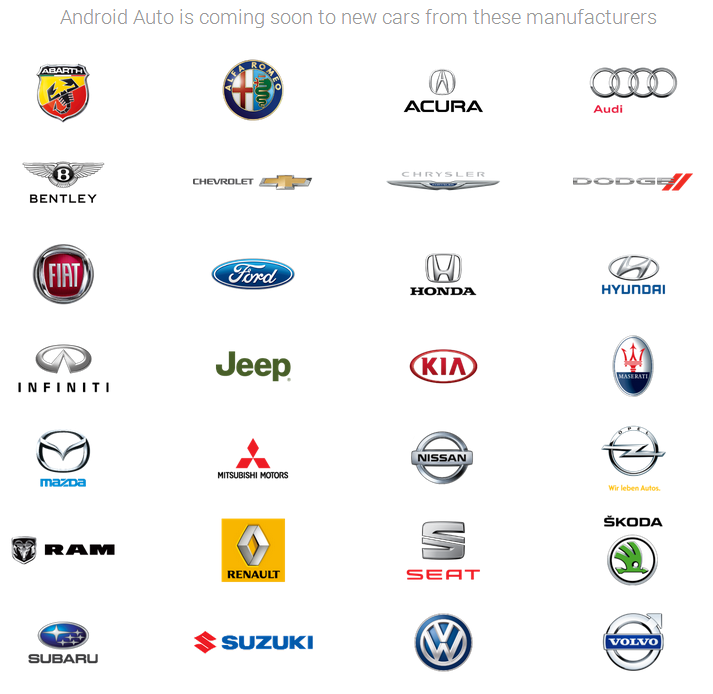
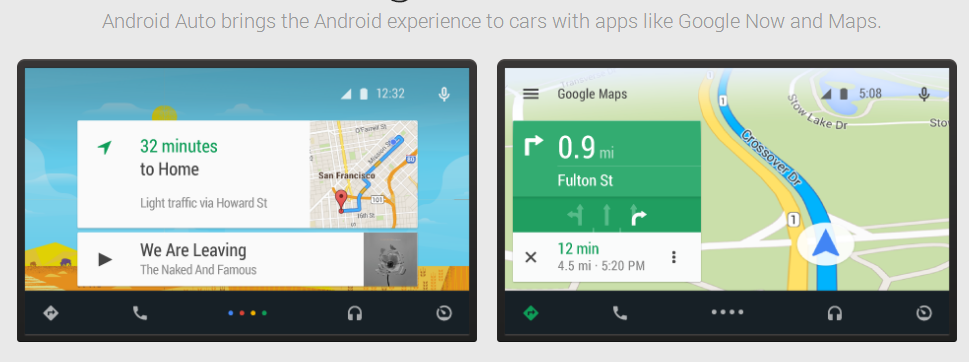
As I’m sure you will know about Google’s driverless cars already. Well Android Auto is designed to link up with current car manufacturers and bridge the gap with traditional industries and make them smarter and digitally enabled. Before talking about what Android Auto is designed to be doing, it is important to note that this isn’t something that Google is simply pushing, this is a platform that a lot of car manufacturers are getting behind as part of the Open Automotive Alliance;
To quote from the Open Automotive Alliance website;
“There are over 1 billion cars on the road today. We rely on our cars for so many things in our lives, but right now the connection between them and the other mobile technology in our lives isn’t always seamless. The Open Automotive Alliance is a group of leading automakers and technology companies that share a vision for making technology in the car safer, more seamless and more intuitive for everyone.” Source
As you can see, this is a huge focus for Google and one where they are looking to integrate their Android Auto platform into cars around the world, allowing customers to communicate more effectively around the globe.
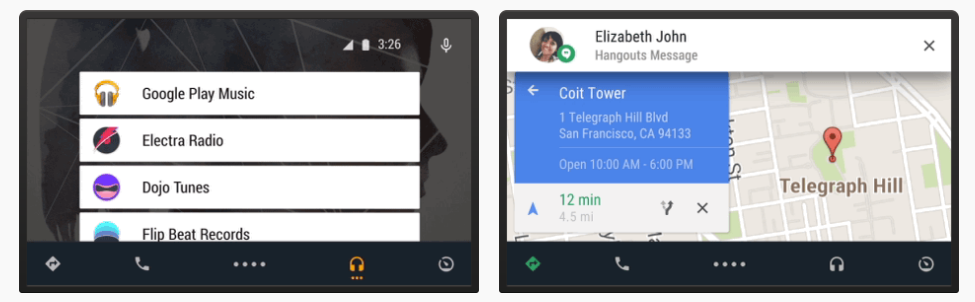
Maps Integration
An obvious use for this technology is to display Google Maps within cars so you no longer have to be distracted changing the settings on your satellite navigation systems which often aren’t anywhere near as useful as Google maps.
Message Popups
Following on from this, it will be possible to pop up messages that have arrived on your mobile phone so you can easily read completely hands free.
With all of this new technology, safety is still paramount and something that everyone involved within this process will be taking very seriously. It is interesting to see where this technology is heading and I imagine we will start to see integrations like this becoming more mainstream in the near future.
For controlling this technology, the platform allows you to link up the standard steering wheel controls to your smart applications, allowing you to control them without taking your focus away from the wheel while driving along with all commands being voice activated too. Very easy to use. Google envisions the future whereby it is as easy to develop apps for cars as easy as it is to build an app for a mobile phone or tablet.
Android TV
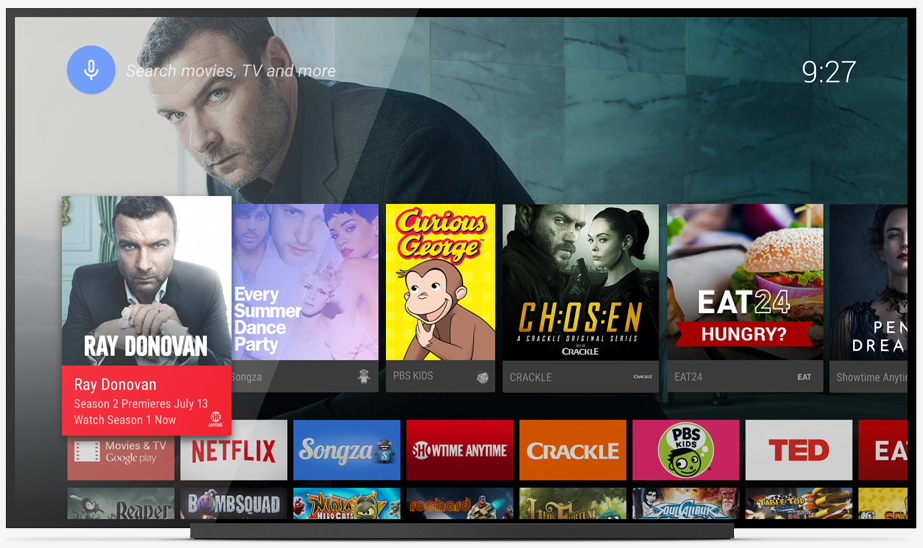
A very similar update to the previous ones, designed to make smart TVs even smarter through the Android TV platform. Customers expect to be able to access content and information from any device they like, at a time that suits them. The idea of sitting in front of the TV at a certain time of day on a specific day of the week is over. On-demand is what customers expect today and Android TV is looking to standardise this industry on the platform.
Content recommendations will be based on your history of what you have watched on the TV along with your personal preferences. In addition, allowing you to easily search on your TV with voice commands. It is already possible to control the TV with your Android mobile phone, so as this technology branches out into smart watches and smart glasses in the near future, I have no doubt that this will become even easier to connect with devices around your home.
In addition to traditional TV, the Android TV platform also links up with the Google Play store, meaning that you can access games and content on the big screen in your home.
Chromecast
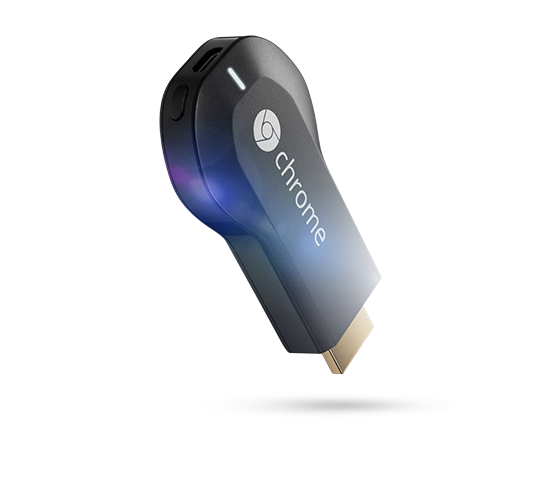
If you aren’t already aware, Google’s Chromecast is designed to allow you to easily stream content to your TV with ease. Chromecast is easy to set up with a simple mobile app, then you can send your favourite online shows, movies, music and more directly to your TV using your smartphone, tablet or laptop. The small device plugs into the HDMI port on your TV.
Previously you needed to be on the same WiFi network to be able to stream content, although Google announced that this is no longer the case. They are in the process of rolling out an update that allows you to stream to any device through the cloud which would authenticate the request. As more smart TVs enter the market, keep an eye out for Google Chromecast enabled devices to allow you to add this extra functionality to your TV.
An interesting statistic that Google mentioned was that they have sold more Chromecast devices than any other casting devices combined from other manufacturers. The power of the Google brand. Another interesting announcement related to Chromecast was for ‘Backdrops’. Backdrops are designed to place ‘something’ on your TV when you aren’t actively using the TV, for example photographs of family etc. An interesting idea which is essentially a huge digital picture frame using your TV instead. While not a very green approach, this is likely being implemented to encourage people to continually have their TV on which will no doubt be a sneaky way to get advertising directly into people’s homes in the future.
The new Chromecast features allow you to stream content directly from your mobile phone, tablet or laptop to your TV with ease. Quick to set up and very simply to use afterwards.
Snippets
A few other snippets mentioned throughout the various presentations included how there are now over 300 million Google Chrome users on mobile this year, which is up from 30 million last year which is an enormous increase. In addition, Google are working on a platform that allows a single device (mobile phone, tablet, laptop) to be used for both personal and corporate use. As each of these will often have varying levels of security and policies in place, it is important to be able to clearly segment these options to give the different groups of users the correct access. This will be an interesting announcement in the future which will ultimately mean that people can walk around with a single set of devices instead of two mobile phones and two tablets which isn’t practical.
Google also talked about Google Apps for Business where there are now over 190 million monthly active users on Google Drive. With specific improvements for enterprise level customers allowing clear reporting and analytics in the background to understand how your staff are using the platform. Interestingly, 58% of Fortune 500 companies are apparently using Google Apps and 72% of the top 100 universities are also using Google Drive.
Summary
The Google I/O annual conference is always an exciting event to see where the company is heading with future products and services, and I’m sure you’ll agree that this year is no different. The key messages to take away from the announcements are around contextually aware devices, wearable technology and creating a seamless experience for your customers as they interact with your business.
For a lot of businesses, this technology will be a little while off until this is ready to be taken advantage of. That said, start planning now for how you are going to be capturing this some of this market in the future. In the near future we are going to be living in an über connected world which puts the control in the hands of the customer. Be ready.
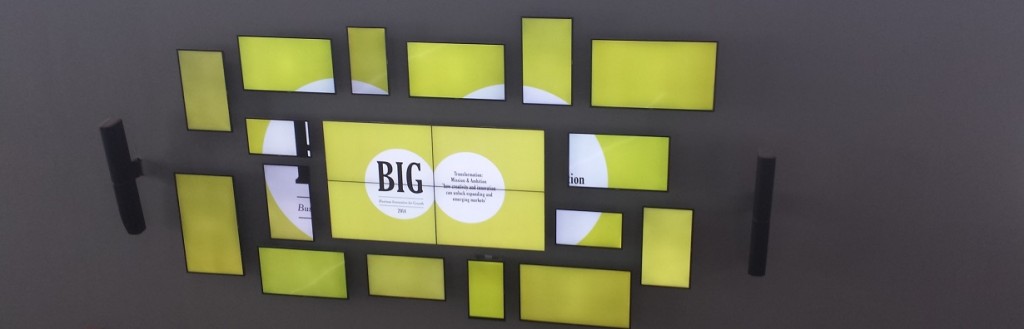
Another conference we attended last week was the BIG 2014 Conference organised by Creative Lancashire. The conference was designed to showcase inspiring examples of business innovation and growth along with future scope and the impact of new ideas and possibilities in business.
Living in a digital world, businesses need to respond quickly to take advantage of expanding and emerging markets. At the heart of this is creativity and innovation, looking at new technologies and an ever increasing list of expectations from customers.
Opening the day was Wayne Hemmingway talking about how creativity is the way to make change happen. Not relying on simply accomplishing a task, but instead looking at more creative ways of completing work both in the digital world and the built environment.
Matt Hunter
Matt Hunter
The first session of the day was from Matt Hunter, Chief Design Officer at the Design Council. Matt was talking about how your customers have absolutely no interest in your horrible legacy back end systems. His message was to stop making excuses for why change can’t happen faster and start to implement the changes needed to stay ahead in the rapidly changing world we now live in.
Transacting with your bank should be as easy as buying a banana. It currently isn’t. Customers are looking for a seamless interaction with your business. To the point where customers, whether end users or other businesses, are more interested in access rather than ownership. This is for resources, data, tools and software. We only have to look at the huge change with Adobe Creative Cloud how this has moved from an enormously expensive system traditionally, to a very affordable monthly subscription to the full suite of products.
Some of the future predictions Matt made included;
New technology around the Internet of Things
Increase in the making of things
Making money while you sleep
Intellectual property
International growth and innovation
Engaging with users
Interesting predictions made and certainly a lot of which I agree with where things are heading.
Chris Sanderson
Chris Sanderson
Next up we had Chris Sanderson from The Future Laboratory who was talking about how a new generation of technology will save us and why mega systems like Google, Facebook, Microsoft, eBay etc. are game changers.
Chris started off by stating that technology doesn’t change society, society changes itself with the use of technology. With the rise in tech hubs, technology schemes, fabrication labs and meet up places such as MadLab in Manchester it is clear we are heading for a big shift in the world.
Mobile devices are often the first thing you touch in the morning when you wake up and the last thing you touch at night before you go to sleep. People have mobile devices almost surgically attached to them with people often being rather worried when their phone leaves their sight.
With the rise of technology, we have lost the traditional B2B and B2C. Chris believes we are turning into a “Trader Age” whereby everyone is both a buyer and a seller which is powered by digital platforms. Quite rightly, Chris asked the question “Is your business fit for purpose in the 21st century?” This is one that all businesses should be asking their self as relying on old technologies, systems and processes is quite simply not going to cut it with modern consumers.
Chris stressed about the importance of not just delivering products and services to your customers, but to deliver experiences. Add value to your customers’ life beyond the traditional product and service approach. An interesting point made next was around the idea of a cashless future as point of sale alternatives hit the market including Square, iZettle and Google Wallet.
Most retailers have no idea about who is walking through their doors. In the future customers will be easily identifiable, will be able to simply pick up goods and walk out of the shop without going to the traditional ‘till’ setup. Instead, the shop will know exactly who the customer is and be able to take payments automatically as products are tagged up correctly.
One technology leading the way with hands free payments is PayPal’s new Beacon technology;
Other technologies including PingIt and Zapp for mobile banking are changing the way customers pay for goods and services in a retail setting. There will be no need for people to carry around pieces of plastic in their wallet to pay for goods and services in the future as traditional credit and debit cards will cease to exist.
One point made was around the term Big Data. This term is a little confusing to most people and often isn’t actually that meaningful. Instead, in the future we will start to see Big Friendly Data which is all around sharing customer big data with the customer, instead of keeping this data internally within the business. As an example, British Airways Executive Club is designed to put you in control as a customer which shares all of your flight history in your account with information about you. All of which is putting more power and control in the hands of the customer to access the information they need at a time that is convenient for them.
Following on from this, with beacon technology springing up there are now beacons such as the one be Estimote which is a contextually aware beacon designed to send data to your mobile phone based on where you are. The video below explains the concept further;
From a retail angle more shops and stores are experimenting with augmented reality and in-store brand experiences that turn a shopping trip into a shopping experience. To the point whereby Burberry is starting to embed RFID tags into both the tags on products in their retail stores and also within the actual textiles of the products their self, to the point whereby this is in their privacy policy;
This is really interesting technology, since when you re-visit the store in the future, they will automatically know who you are. Reading through their current privacy statement, they state that they aren’t joining the dots between the product and their customer database, yet, although they may do this in the future. Imagine having that personal experience when you visit a store in the future.
Following a similar trend with new technology is around the August Smart Lock which is designed to turn the front door in your house into a smarter tool that you can control. The video below explains how the concept works;
This all being said, a quote from Dave Caplin, Microsoft’s Chief Envisioning Officer sums things up well stating that “Analytics, the way we bring data together, is still a little out of reach for many organisations”. This is true for simply online data such as Google Analytics and other systems, let along bridging this gap between online and offline data.
On the theme of virtual reality, Topshop recently set up a virtual reality cat walk so anyone from the general public could experience front row seats for London Fashion Week 2014. Really interesting way that the virtual and digital worlds are blending, in this example going from physical to digital to physical for people. Imagine this being broadcast around the world for everyone to see;
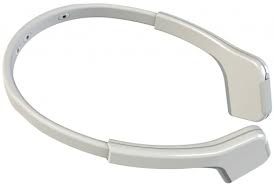
Another interesting point Chris made was about how we are going to start to see ubiquitous wearable technology in the near future as more people start to catch on with the technology. Including Google Glass, Muse the brain sensing headband and technologies mentioned earlier for cashless currencies.
Muse brain sensing headband
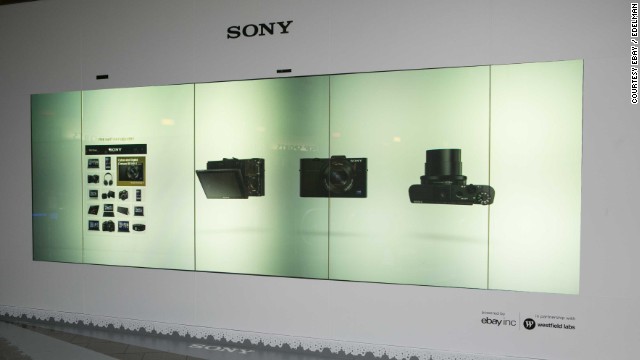
As we start to see further enhancements with improved biometric scanners and devices, we will start to see these break out into the general populous which will allow brands to truly experiment with customer experiences. Including items such as the Sony digital store front in San Francisco with the endless aisle;
Sony Digital Store Front Endless Aisle
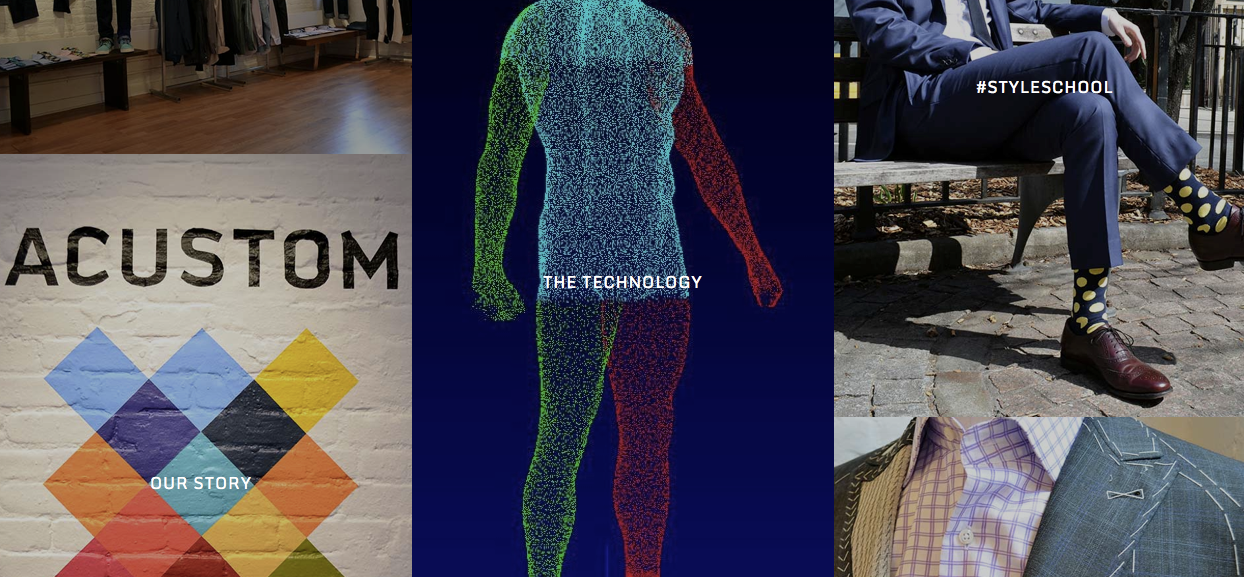
Following on from this, Chris talked about the 3rd industrial revolution with the rise in 3D printing and rapid manufacturing. With the likes of Acustom Apparel using 3D body scanners to scan 200,000 points on your body to fit clothes exactly to your body shape;
Acustom Apparel 3D Body Scanning
What this relates to is personalised manufacturing along the whole supply chain through the use of digital technologies and enhanced brand experiences. Take the idea for the endless chair design revolution which allows products to be manufactured automatically to order with 3D printing technology;
To summarise the areas Chris was talking about;
Prepare for smartphone supremacy, with a mobile first approach to everything
Create a cashless future with global office transactions through a mobile wallet
Use your location to interact with digital technologies, become contextually aware and create contextually aware systems
Join the Internet of Things, embrace online interactions within physical brick and mortar stores
Start scanning with 3D body scanners
Become biometric as technologies progress
Enable ubiquitous wearables as they become mainstream
A final interesting point made by Wayne Hemmingway following Chris’s talk was that technology should be reducing the gap between those that have and those that have not. This isn’t the case. Technology is making the gap larger. As a society, this needs to be looked at.
In addition, people no longer have to be looking to commute 2-3 hours per day to travel into work. Instead, we are starting to see the rise of community hubs, tech hubs, office hubs whereby people can work from various locations with ease.
A point was also made around the traditional thought process that everything online is free. This time is over. Digital materials are ever increasingly being turned into paid products and customers are starting to realise this and are more willing to pay for digital goods and information online.
Breakout sessions
Within the two breakout sessions, multiple people were speaking about a range of topics, so I’ll look to cover all of these together. The first breakout session talked about New Technologies and included Professor Rachel Cooper OBE from LICA, Dr Ania Servant from the National Graphene Institute, Asa Calow from MadLab in Manchester, Dr Paul Coulton from Imagination Lancaster and Chris Sanderson from The Future Laboratory.
Ania kicked off the session talking about how the potential for graphene is truly ground breaking. Imagine being able to have super-superfast broadband that is cable of downloading a terabyte of data within seconds along with being able to re-charge your mobile phone in only 5 seconds with powerful superconductors.
Asa then talked through how we are starting to see a professional side of the traditional maker industry. We are starting to see hobbyists turning into product companies. With fabrication labs increasingly popping up, we are going to start to see more of this in the near future.
Paul then talked about how the Internet of Things is still in the GeoCities stage of the internet. One tip was that we shouldn’t just be plugging the internet into everything, instead thinking along the lines of what digital things can we turn into physical items.
The second breakout session talked about Our Relationship with Users and included Wayne Hemmingway MBE from Hemmingway Design, Darren Evans from The Engine Room, Richard Scholey from The Chase, Kayleigh Davis from the Lego Group and Katie Gallagher from Manchester Digital.
As part of the discussions the key message was always to focus on the users. The example for which I always personally use when talking to businesses particularly in manufacturing is to focus on the customers and not the machine, as was reiterated during the session.
Often manufacturing companies have invested heavily in a specific machine which can cost near to £1 million for the single machine, and rightfully so they are proud of this investment. Although customers couldn’t care less what machine you have, nor what brand it is. All customers are interested in is WIIFM – What’s In It For Me. Talk about the benefits in terms your customers can clearly understand.
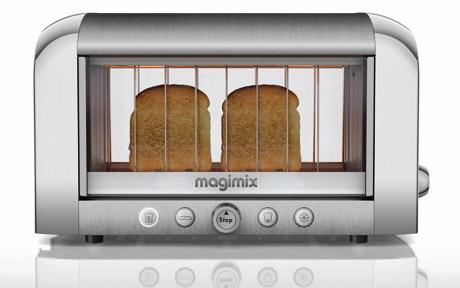
As an interesting example, the Magimix transparent toaster was shown, which clearly has thought about the user. Every single person reading this blog post will have at some point burnt a piece of toast as toasters aren’t smart enough to realise that when you have the setting on ‘Number 3’ when the toaster has just been on, then it really only needs to be on ‘Number 2’, which ultimately results in lots of pieces of burnt toast. The Magimix toaster resolves these issues;
Magimix Transparent Toaster
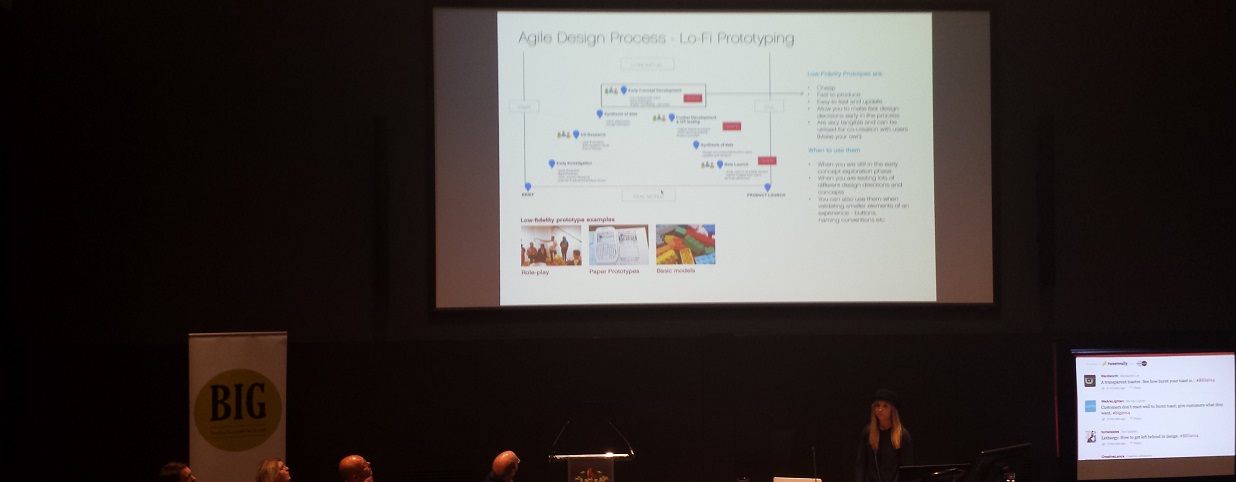
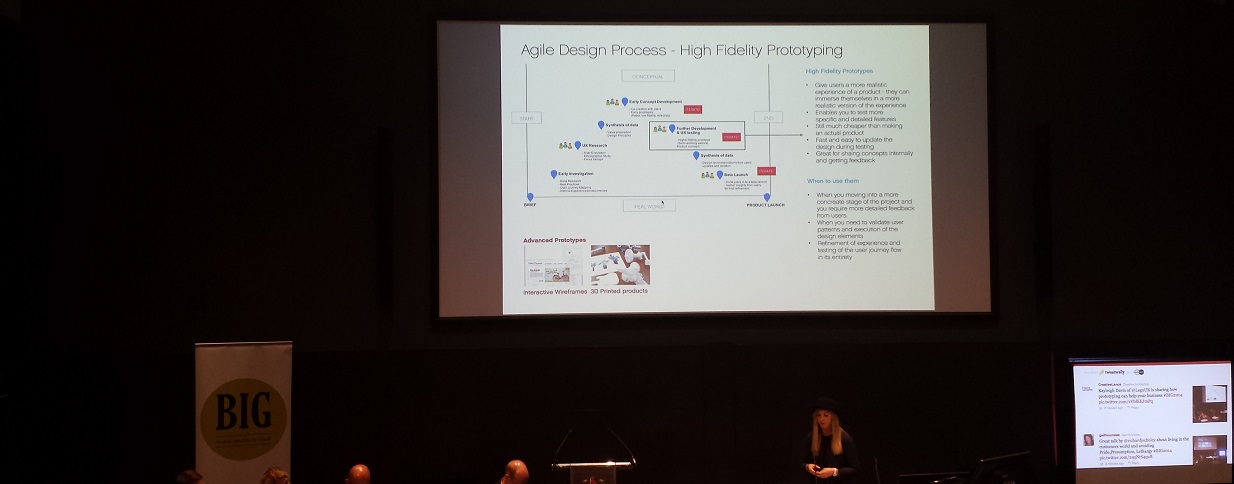
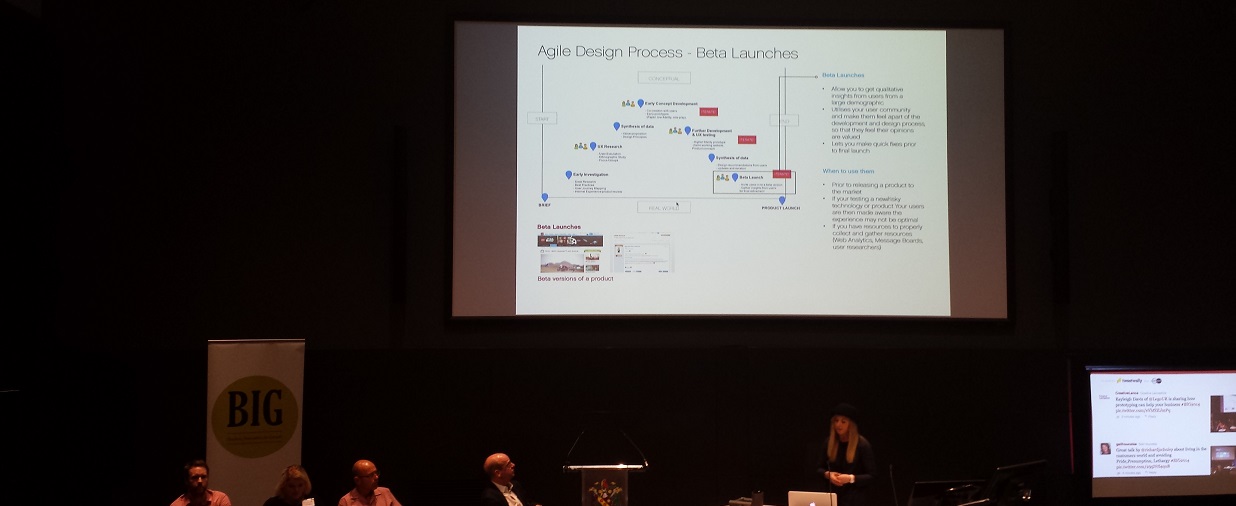
Next up we had Kayleigh from the Lego Group who talked about the design process of lo-fidelity prototyping which means that products can be tested quickly and feedback can be given. Lego’s best tip is to always get feedback from users at the beta stage of the product so you don’t invest to heavily only to find out that something isn’t quite right.
Interesting insight into Lego’s prototyping stages including Lo Fidelity prototyping, High Fidelity prototyping and Beta Launches;
Lego’s Lo-Fi Prototyping
Lego’s Hi-Fidelity Prototyping
Lego’s Beta Launches
The conversation then turned to the question for businesses about “What is your digital strategy?” Often most business don’t have a solid digital strategy in place. Instead, the focus is on websites, mobile applications, social media. This is not a strategy, these are parts of the strategy. What do you really want to achieve for your customers and users? Understand this and you will see how all the different parts link up and can work seamlessly together. This will also allow you to focus clearly on what is required and not on areas that aren’t in line with your digital strategy.
In a digital world, there really is no excuse to not know what your customers are saying about you online. With so many monitoring tools available, businesses need to be getting engaged in the conversations that are happening. An interesting point made was that some businesses will need to fundamentally change how they do business and re-look at their business model. With the question being, how are you going to put the user at the center of everything you do? It is time to critically assess your business for a digital age.
One example given by Wayne was with a recent project to design new staff uniforms for all of Transport for London’s 22,000 staff. Part of this process was to engage with every single person to get feedback throughout the process, and most importantly to get buy in throughout the process at a time when there has been many issues with salaries and strikes.
This wasn’t a design by committee approach, but instead about giving the staff a voice on the new uniforms through the use of technology. Utilising a staff intranet, this led to over 16,000 people commenting on the work which is practically unheard of for large scale projects like this.
Following on from this a point was made about not trying to argue a point one way or another. Instead looking at a point and proving this point with data and evidence, both quantitative and qualitative. The amount of data available online means that you no longer have to rely on ‘gut feelings’ to make business decisions.
Daniel Charny
Daniel Charny
The next session was from Daniel Charny from From Now On who talked about the business of making. He has been seeing a renewed interest in making with lots of commercial value.
Stating that this is often more about knowledge sharing and sharing best practice between peers within group spaces designed to facilitate this sharing. One example Daniel talked about was with the Maker Library Network which is designed to link together the ideal of a library, gallery and a maker space all in the same venue;
Maker Library Network
This co-working space means that the skills and people are around to help with projects. An interesting idea talked about was the “Gift Economy” which isn’t about you scratch my back and I’ll scratch yours, but instead is more of I’ll scratch your back and you scratch someone elses.
Phil Jones
Phil Jones
In the final talk of the day we heard from Phil Jones the Managing Director of Brother UK. Phil was talking mainly to the audience of creative businesses in the room for the last session which covered some interesting topics.
Stating that creative businesses need to be more sustainable. This often comes down to not revving harder, but instead changing gear in the business. Often businesses don’t simply need to be doing more of what they are doing, but change what they are doing and focusing on more profitable areas in the business.
Overall, a very energetic talk with some really exciting points made for all creative businesses and corporate businesses looking to work with creative industries. Often both groups speak different languages, so bridging the gap through effective communication is key.
Summary
Overall the day covered an awful lot of great and exciting content, so a huge thanks to Creative Lancashire for organising the event. I’m sure a lot of the information, topics and example above have got your brain working to see how this could be implemented within your own businesses.
If you would like to talk through more about the topics discussed above then get in touch to find out how digital can transform your business.