by Michael Cropper | May 17, 2017 | Digital Pulse |
Posted by Quoc Le & Barret Zoph, Research Scientists, Google Brain team
At Google, we have successfully applied deep learning models to many applications, from
| Our GoogleNet architecture. Design of this network required many years of careful experimentation and refinement from initial versions of convolutional architectures. |
To make this process of designing machine learning models much more accessible, we’ve been exploring ways to automate the design of machine learning models. Among many algorithms we’ve studied, evolutionary algorithms [1] and reinforcement learning algorithms [2] have shown great promise. But in this blog post,
Source:: Using Machine Learning to Explore Neural Network Architecture
by Michael Cropper | May 17, 2017 | Digital Pulse |
Posted by Brian Strope, Research Scientist, and Ray Kurzweil, Engineering Director, Google Research
Last year we launched Smart Reply, a feature for
Each module processes inputs and provides transformed representations of those inputs on its outputs (which are, in turn, available for the next level). In the Smart Reply system, and the figure above, the repeated structure has two layers of hierarchy. The first makes each feature useful as a predictor of the final result, and the second combines these features. By definition, the second works at a more abstract representation and considers a wider timescale.
By
Source:: Efficient Smart Reply, now for Gmail
by Michael Cropper | May 17, 2017 | Digital Pulse |
On June 8th the UK will head to the polls for #GE2017. On a weekly basis we here at Twitter UK will be ploughing through the millions of related Tweets, looking at the main topics of debate, and seeing which MPs and parties are setting Twitter alight
Source:: The latest Twitter data for the UK #GE2017
by Michael Cropper | May 17, 2017 | Digital Pulse |
It’s your first day as a social media manager for a new company. Where do you even start?
This question is a common one, but one that often goes unasked as people are worried about seeming inexperienced or making a bad impression when they start a new job. Really, it’s a very reasonable question. Making a critical error would be far more costly than asking colleagues for help.
You can’t just jump in and start tweeting on behalf of a business you’re unfamiliar with. Every company has a different audience, different needs, and different goals for their social media presence. But you
Source:: 8 Things to Do During Your First Week as a Social Media Manager
by Michael Cropper | May 17, 2017 | Digital Pulse |
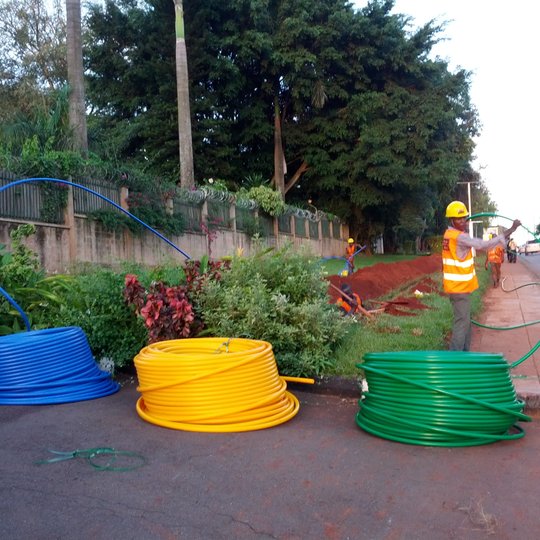
Three billion people around the world are now online, but access remains critically low in Africa, where only 10 percent of households can connect to the internet.
In 2011, a team of Googlers identified a major barrier to affordable, reliable broadband in Africa: the lack of fiber optic networks in large cities. This led to Project Link, an initiative to build world-class, high-speed urban fiber networks in Africa’s metropolises. In 2013 we folded these efforts under a new Google brand called CSquared with the aim of bringing other companies into the market, expanding access and lowering costs.
Source:: CSquared gets new investors to expand internet access in Africa